







Summary
TMX operates a user-friendly online commodity trading platform that integrates warehousing and regulatory systems, allowing buyers to compete through real-time auctions.
DODOMA: TANZANIA has generated more than 5.87 trn/- from the sale of over 2.036 million tonnes of agricultural commodities traded through the Tanzania Mercantile Exchange (TMX), highlighting the growing importance of the country’s organized commodity trading system.
The lucrative amount was realized from transactions involving ten key agricultural commodities and minerals during the 2025/26 and 2026/27 marketing seasons.
The commodities included sesame, cocoa, coffee, soybeans, tea, lentils, pigeon peas, green grams, cashew nuts and gemstones.
The impressive economic record has been was revealed by TMX Chief Executive Officer (CEO), CPA Godfrey Malekano, during the opening of a special workshop for journalists from Tanzania’s central zone.
The workshop aimed to enhance media understanding of TMX’s establishment, structure, operations, achievements and challenges.
Malekano said TMX, Tanzania’s first organized and regulated commodity exchange, operates under a public-private partnership model that connects farmers, cooperatives and global buyers, while ensuring transparent price discovery, quality assurance and secure payment systems.
According to Malekano, since the beginning of the 2026/27 marketing season, TMX has facilitated the sale of 8,665.6 tonnes of sesame worth 24.93bn/-.
During the sale, he said the highest market price reached 2,740/- per kilogram, while the lowest was 2,310/- per kilogram.
He said sesame supplied to the exchange originated from several regions, including Songwe (6,684.299 tonnes), Ruvuma (1,406.972 tonnes), Tabora (534.250 tonnes) and Rukwa (40.208 tonnes).
The TMX CEO noted that the exchange has facilitated the sale of 32,335 tonnes of green grams worth 54.98bn/- during the current season, with prices ranged from 1,240/- to 1,660/- per kilogram.
For cocoa, TMX coordinated the sale of 11,179 tonnes during the 2025/26 season, generating approximately 138.93bn/-.
He added that the commodity fetched prices ranging between 5,540/- and 16,340)- per kilogram.
Malekano further disclosed that TMX facilitated the sale of 270,740 tonnes of pigeon peas worth 286.44bn/- during the 2025/26 season, whereby prices ranged from 570/- to 1,350/- per kilogram.
Similarly, the exchange handled the sale of 132,424 tonnes of lentils valued at 160.88bn/-, with prices ranging between 760/- and 1,430/- per kilogram.
In the coffee sector, he communicated that TMX facilitated the trading of 27,544.52 tonnes worth 154.88bn/- during the same season.
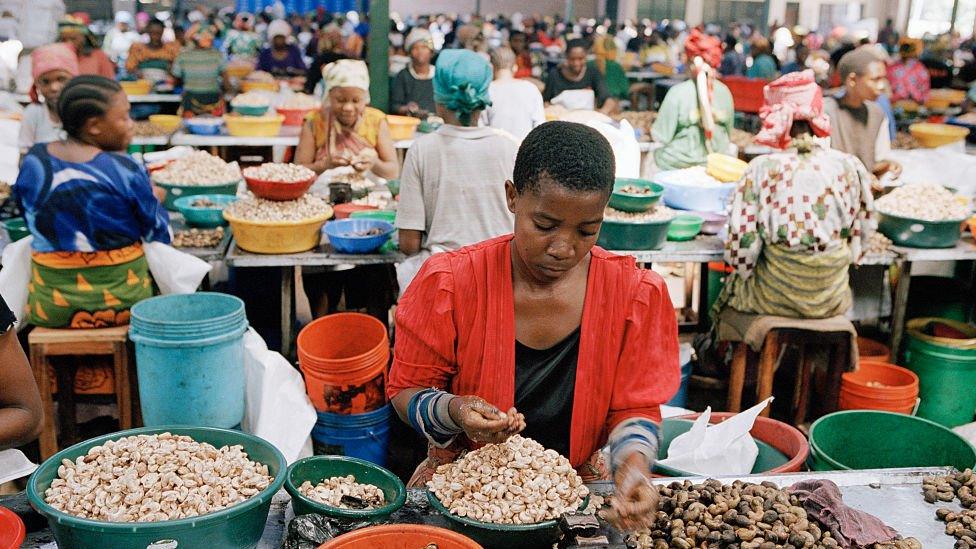
Speaking at the workshop, TMX Senior Trade Officer, Ms Justa Martine said market trends indicate that cashew nuts, sesame and pigeon peas are among Tanzania’s most sought-after export commodities.
She noted that the crops enjoy strong demand in major international markets, including China, India and Dubai.
“Cashew nuts and sesame from Tanzania often command premium prices compared to similar commodities produced in other major producing countries such as Côte d’Ivoire and Ghana,”she said.
Ms Martine emphasized the need for local farmers to increase production and productivity in order to fully capitalize on the lucrative opportunities available in global markets.
She expressed that TMX currently conducts commodity trading through a Spot Exchange system, which facilitates rapid payments, transparent transactions and efficient price discovery.
According to her, the exchange also plans to introduce a “Futures and Futures” market system, which enables buyers and sellers to agree on prices and quality standards in advance, helping reduce risks associated with price fluctuations.
However, Martine observed that the futures trading system has not yet been introduced in Tanzania due to limited awareness and understanding among local market participants.
“TMX operates a user-friendly online commodity trading platform that integrates warehousing and regulatory systems, allowing buyers to compete through real-time auctions,”she said.
She added that the exchange provides real-time market and pricing information in both English and Kiswahili, enabling farmers to make informed production decisions based on actual market demand and value.
Licensed by the Capital Markets and Securities Authority (CMSA) under the Commodity Exchange Act, TMX plans to expand its commodity portfolio in the near future.
Additional commodities expected to be incorporated into the exchange include sisal, maize, leather, livestock, fish, cotton, spices and groundnuts.
To ensure that exported agricultural commodities meet international quality and safety standards, TMX works closely with several agricultural institutions, including the Tanzania Agricultural Research Institute (TARI), the Tanzania Official Seed Certification Institute (TOSCI), the Tanzania Plant Health and Pesticides Authority (TPHPA) and the Cereals and Other Produce Regulatory Authority (COPRA), among others.
The collaboration aims to strengthen quality assurance systems, improve market access and enhance Tanzania’s competitiveness in regional and international commodity markets.