











By Staff
Reporter
THE UN
Agency for International Development (USAID) has expressed to have been
impressed with the numerous achievements so far attained in the implementation
of the first year of the Feed the Future Tanzania Kilimo Tija Project in the
country.

In a
tailor –made event to cerebrate the prosperous of the robust project held at
the Ministry of Agriculture Training
Institute (MATI) –Ilonga in Kilosa, Morogoro Region, USAID/Tanzania
Economic Growth Officer Deputy Director, Plato Hieronimus emphasized the
importance of strengthening partnership between Tanzania, the United States,
and the private sector in generating opportunities for youth development and
job creation.
“Without
the the crucial inputs from the private sector as well as enormous support from
the government of Tanzania , this USAID project would not be possible. Because
of this partnership 2,500 Tanzanian micro, small, and medium enterprises
(MSMEs) will have the support they mostly need to invest USD20 million in
growth and generate 7,400 new jobs,” Hieronimus expressed.

In course
of its implementation, (2022-2027), the ambitious initiative also seeks to
achieve a 15 percent annual revenue growth for the enterprises and over USD
100,000 in sales of produce from smallholders farmers.
Being in
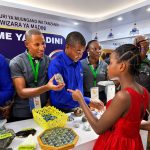
its initial phase, the Project’s Pivotal Horticulture Training Center (PTC)
facility was utilized to provide hands-on training to over 420 beneficiaries,
including MATI lecturers and students, extension staff, farmers, whereby a
total of 84 youths engaging into the Building
Better Tomorrow Youth in Agriculture (BT-YIA) were incubated at the facility to
get practical knowledge and skills in horticulture.

The
fruitful collaborations among the USAID Kilimo Tija amd the MATI –Ilonga teams
to the PTC initiative resulted in investments exceeding 124.8m/- at the MATI
Ilonga 5-acre demonstration facility, equipped with modern farming
technologies.
‘The
facility will continue to equip extension staff with the use knowledge and
skills needed to effectively support smallholder farmers in the region,” he
added.
Targeting
Tanzania’s Southern Agricultural Growth Corridor of Tanzania (SAGCOT) regions
of Iringa, Mbeya, Morogoro and Njombe, along with Zanzibar’s Unguja and Pemba
islands, USAIDS’s USD37.9million Kilimo Tija’s primary goal is to sustainably
increase economic opportunities in horticulture market system, with a special
focus on youth.
Furthermore,
the project works with public and private sector associations, youth-led and
women –focused institutions, and national and local government authorities to
enhance horticulture markert system,and unlock economic opportunities, particularly for the youth.

The main
horticultural crops of Tanzania include tomatoes, cabbages, onions, carrots,
round potatoes, mangoes, oranges, and flower seeds, among others. Tanzania’s
horticultural industry largely depends on smallholder farmers who own less than
2 hectares of land.