






Summary
Resin tapping, a non-timber forest product (NTFP) activity carried out mainly on pine trees, enables forest growers to earn income while waiting for trees to mature for timber harvesting.
KILIMANJARO: THE Tanzania Forest Services Agency (TFS) has launched an ambitious resin tapping project in its northern circuit forest plantations as part of efforts to increase revenue generation and promote value addition in the forestry sector.
Resin tapping, a non-timber forest product (NTFP) activity carried out mainly on pine trees, enables forest growers to earn income while waiting for trees to mature for timber harvesting.
The initiative is already emerging as a significant source of revenue and employment opportunities in the country.
Speaking about the project, TFS Senior Assistant Conservation Commissioner (SACC), Mr. James Nshare, said the initiative has attracted growing interest from both local and foreign investors due to its strong economic potential.
“Through this project, we have significantly increased revenue collection, with some forest estates generating up to one billion shillings annually from resin sales,” he said.
Nshare, who also serves as the TFS zonal conservation commissioner for the northern circuit, said the plantations currently involved in resin tapping include Northern Kilimanjaro (Rongai), Meru, and West Kilimanjaro forest plantations.
He spoke over the need for more investment in local resin processing industries to maximize the value chain within the country.
“At the moment, most investors involved in the business are exporting raw resin abroad. However, our goal is to see the product processed locally to create more economic benefits for Tanzania,” he explained.
According to him, TFS is collaborating with other like-minded institutions to ensure professional management, monitoring, and sustainable development of the project.
“The encouraging aspect is that resin tapping does not interfere with the healthy growth of trees,” he noted.
He further revealed that the Sokoine University of Agriculture (SUA) has introduced a new course in forest product processing, expressing optimism that the programme will help produce skilled experts to support the growing resin industry.
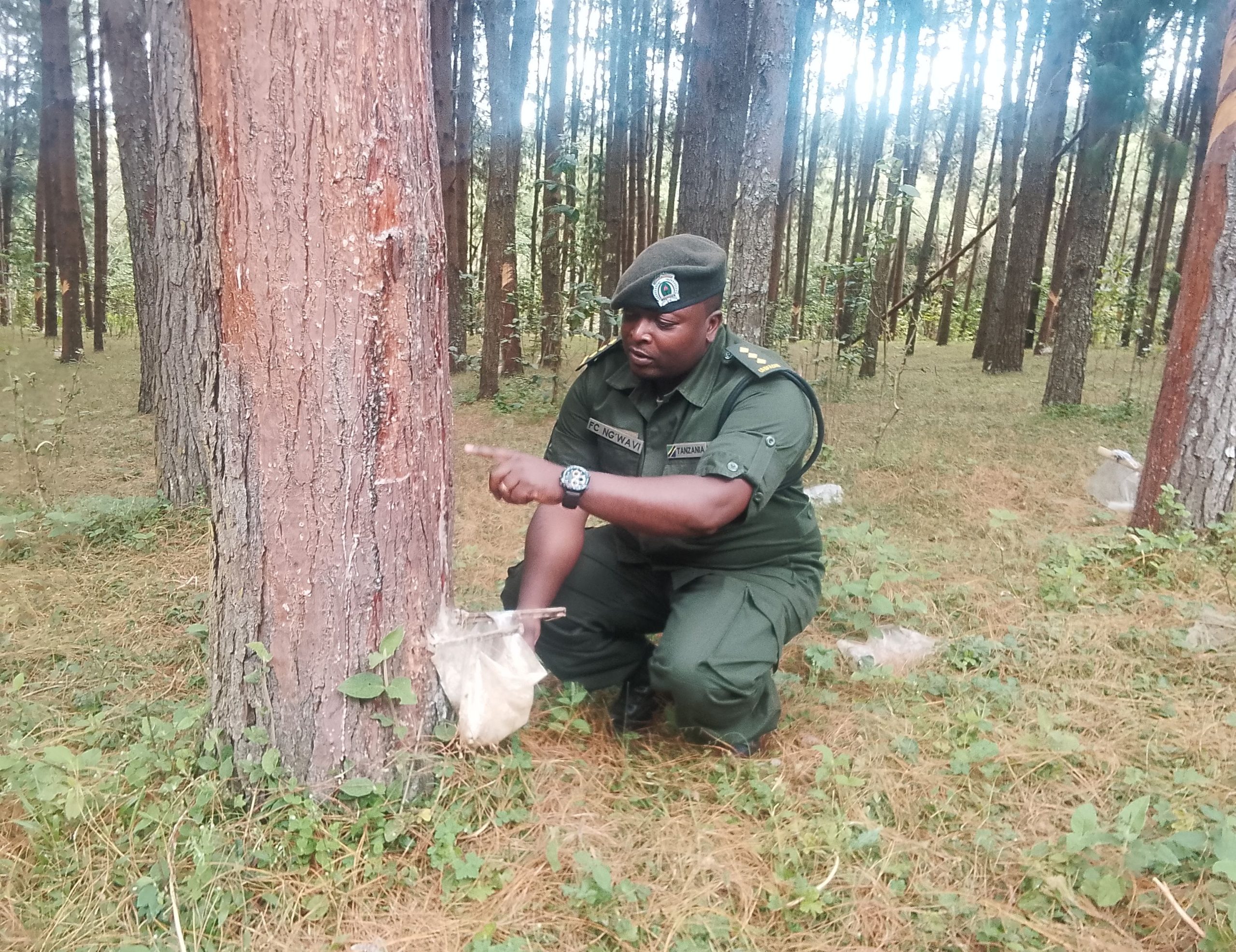
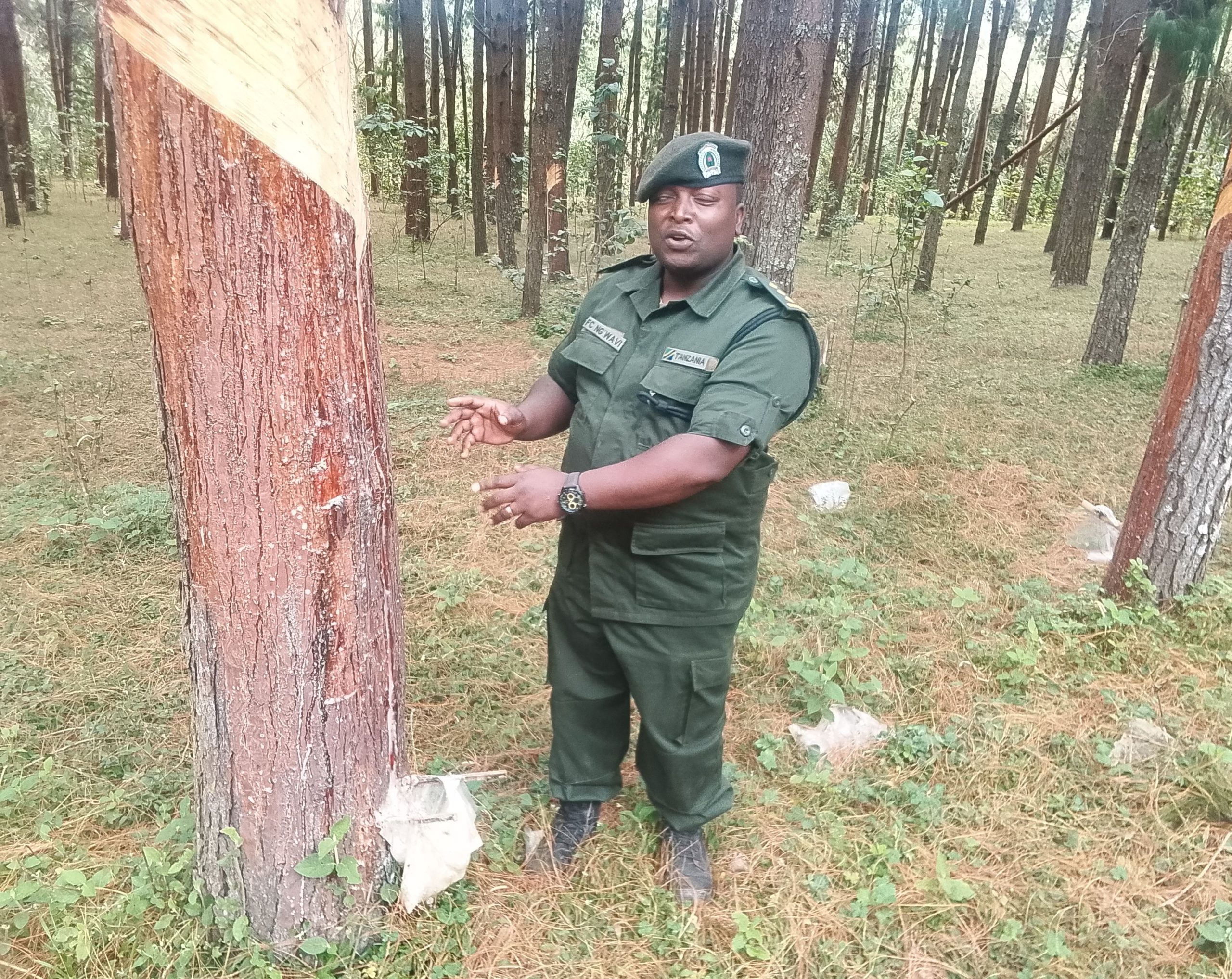
Senior Conservation Officer (CSO) for the Northern Kilimanjaro Forest Plantation in Rongai, Fred Ng’wani shows the way resin tapping project is taking place at the vast tree estate
Meanwhile, senior conservation officer (CSO) for the Northern Kilimanjaro Forest Plantation in Rongai, Mr. Fred Ng’wani, said the project has already generated more than 178 million Tanzanian shillings within eleven months of operation.
“We began resin tapping here eleven months ago and have so far harvested 300,638 kilograms of resin out of our target of 600,000 kilograms,” he said.
Mr. Ng’wani added that the project has gained strong momentum and created employment opportunities for about 170 workers in the area.
Studies indicate that Tanzania’s forest sector, particularly in regions such as Kilimanjaro, Arusha, and Tanga, has considerable potential for resin production that could improve rural livelihoods and contribute to economic growth.
Research findings further show that annual pine resin yields can range from approximately 0.5 kilograms to more than 1.9 kilograms per tree depending on species, environmental conditions, and tree size, with larger diameter trees generally producing higher yields.