











Summary
The initiative seeks to improve the quality, efficiency and scale of seed production, underscoring the state-owned agency’s commitment to meeting the growing demand for certified seeds among farmers nationwide.
ARUSHA: THE Tanzania Agricultural Seed Agency (ASA) is set to roll out an ambitious modernisation programme aimed at transforming its seed production estates across the country to increase the supply of high-quality seeds and strengthen Tanzania’s agricultural sector.
The initiative seeks to improve the quality, efficiency and scale of seed production, underscoring the state-owned agency’s commitment to meeting the growing demand for certified seeds among farmers nationwide.
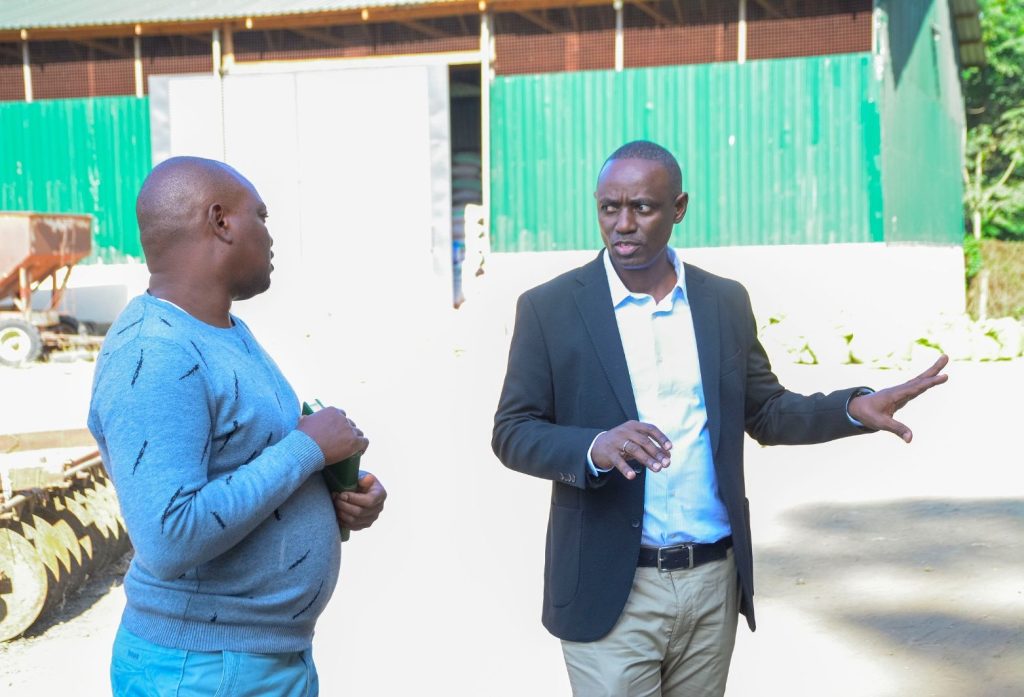
ASA’s Acting Chief Executive Officer, Eng. Innocent Masaka, said the agency plans to modernise all its seed farms by installing cloud-connected infrastructure and other advanced technologies to improve production efficiency and management.

ASA’s Acting Chief Executive Officer, Eng. Innocent Masaka
Eng. Masaka, who recently assumed leadership of the agency following the retirement of former Chief Executive Officer Mr Leo Mavika, said his priority is to transform ASA into a more commercially driven institution while maintaining its strategic role in supporting the country’s food security.
“Our vision is to build ASA’s capacity to produce enough high-quality seeds to meet the increasing demand from farmers across the country,” he said.
He made the remarks during a working visit to the Ngaramtoni Seed Farm in Arusha, where he inspected the progress of seed production on the 450-hectare estate and assessed the status of existing infrastructure.
According to Eng. Masaka, the modernisation programme will include the installation of advanced irrigation systems, construction of modern seed processing plants and expansion of digital infrastructure across major seed farms.
He said the investments will significantly increase production volumes while ensuring that all seeds meet the required quality standards.
ASA owns about 17,000 hectares of land designated for seed production, making it one of Tanzania’s leading seed multiplication institutions.
However, only 13,600 hectares are currently suitable for seed production, highlighting the need for additional productive land to help bridge the country’s seed supply gap.
During the 2025/26 agricultural season, the agency targeted production of 22,344 tonnes of certified seeds.
In the previous 2024/25 season, ASA produced 9,303 tonnes of seeds for various strategic crops, representing a remarkable 106.27 per cent increase from the 4,510 tonnes produced during the 2023/24 season.
According to figures from the Ministry of Agriculture, Tanzania’s annual demand for certified seeds stands at about 127,650 tonnes, while the current national supply is approximately 70,000 tonnes, leaving a significant production deficit.
To narrow this gap, ASA has expanded its contract seed growers programme. The agency has so far signed agreements with 102 contract growers who are producing seeds at various locations across the country.
As part of efforts to build resilience against climate change, which continues to threaten agricultural productivity, ASA has also invested heavily in irrigation infrastructure.
Modern irrigation systems have already been installed at the Kilimi, Arusha and Msimba seed farms, while similar projects are planned for the Namtumbo, Mbozi and Mwele seed estates.
Established under the Executive Agencies Act No. 30 of 1997 and officially launched in June 2006, ASA operates as a semi-autonomous agency under the Ministry of Agriculture. It took over the responsibilities of the former Seed Unit of the ministry and is mandated to ensure the availability of quality agricultural seeds to farmers at affordable prices.
The agency’s latest modernisation strategy is expected to play a critical role in improving seed availability, enhancing agricultural productivity and supporting Tanzania’s long-term food security and economic development goals.