








Summary
Valued at 4.5 billion/-, the project involves heavy grading of the entire road, construction of seven box culverts, and raising embankments in flood-prone sections to improve year-round accessibility.
SERENGETI: Tanzania is investing 12.6 billion/- in a major infrastructure programme inside Serengeti National Park, reinforcing its commitment to protecting the country’s most prized tourism destination while ensuring uninterrupted access for visitors throughout the year.
The ambitious investment reflects the government’s strategy of combining wildlife conservation with resilient infrastructure capable of withstanding increasingly extreme weather conditions, thereby safeguarding one of the world’s most celebrated natural ecosystems.
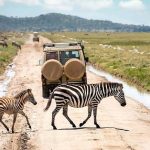
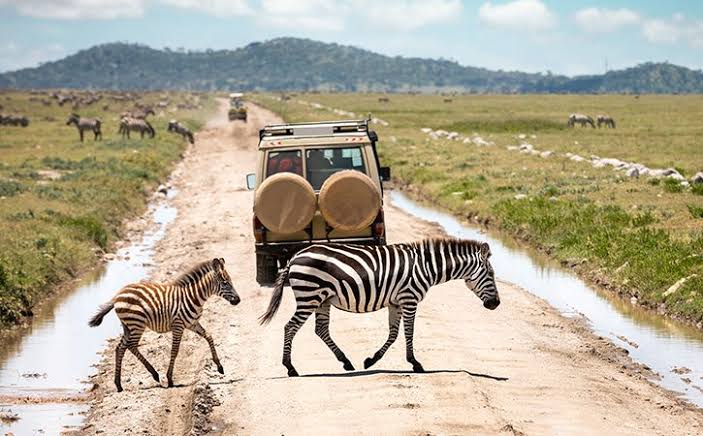
Recognised globally for the spectacular annual migration of more than two million wildebeest, zebras and gazelles, the Serengeti remains Tanzania’s premier tourism attraction and one of Africa’s most iconic protected areas.
Every year, the park attracts hundreds of thousands of international visitors, making it the flagship of the country’s tourism industry.
Beyond its ecological significance, the Serengeti plays a vital role in Tanzania’s economy.
Tourism is the country’s leading foreign exchange earner and one of its largest economic sectors, supporting hundreds of thousands of jobs directly and indirectly.
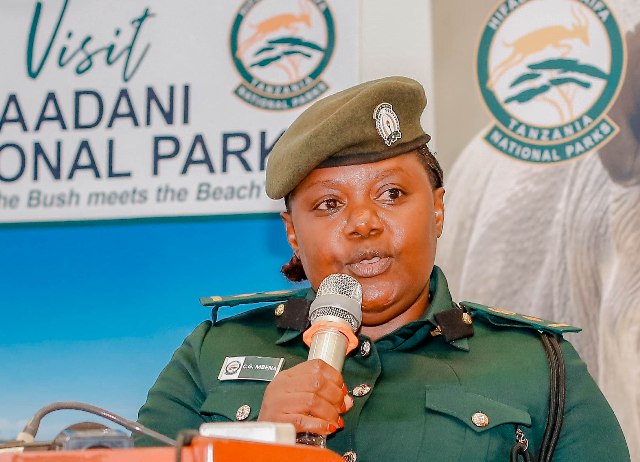
Tanzania National Parks (TANAPA) Assistant Conservation Commissioner for Corporate Communications, Catherine Mbena.
Revenue generated from the Serengeti sustains conservation efforts, benefits surrounding communities, supports the hospitality and aviation industries, and contributes substantially to government revenue.
For the government, therefore, investing in infrastructure within the park goes far beyond improving transport networks—it is a strategic investment in the long-term sustainability and competitiveness of Tanzania’s tourism economy.
“The Sixth Phase Government under President Samia Suluhu Hassan, through the Ministry of Natural Resources and Tourism, is making significant investments to ensure that the efforts undertaken to market Destination Tanzania are matched by equally strong investments in infrastructure,”
“This will enable visitors to enjoy quality facilities and services while experiencing the country’s unique attractions,” said Tanzania National Parks (TANAPA) Assistant Conservation Commissioner for Corporate Communications, Catherine Mbena.
The largest project under the programme is the rehabilitation of the 121-kilometre Ndabaka-Seronera Road, the principal gateway linking the Serengeti with western Tanzania.
Valued at 4.5 billion/-, the project involves heavy grading of the entire road, construction of seven box culverts, and raising embankments in flood-prone sections to improve year-round accessibility.
Construction commenced in June and is expected to be completed by December.
An additional 8.1 billion/- has been earmarked for the construction of bridges and river crossings at Banagi, Mti wa Rangi, Naabi, Kwa Bona and Mokas. Geotechnical investigations have already been completed, while detailed engineering designs are underway ahead of the commencement of construction.
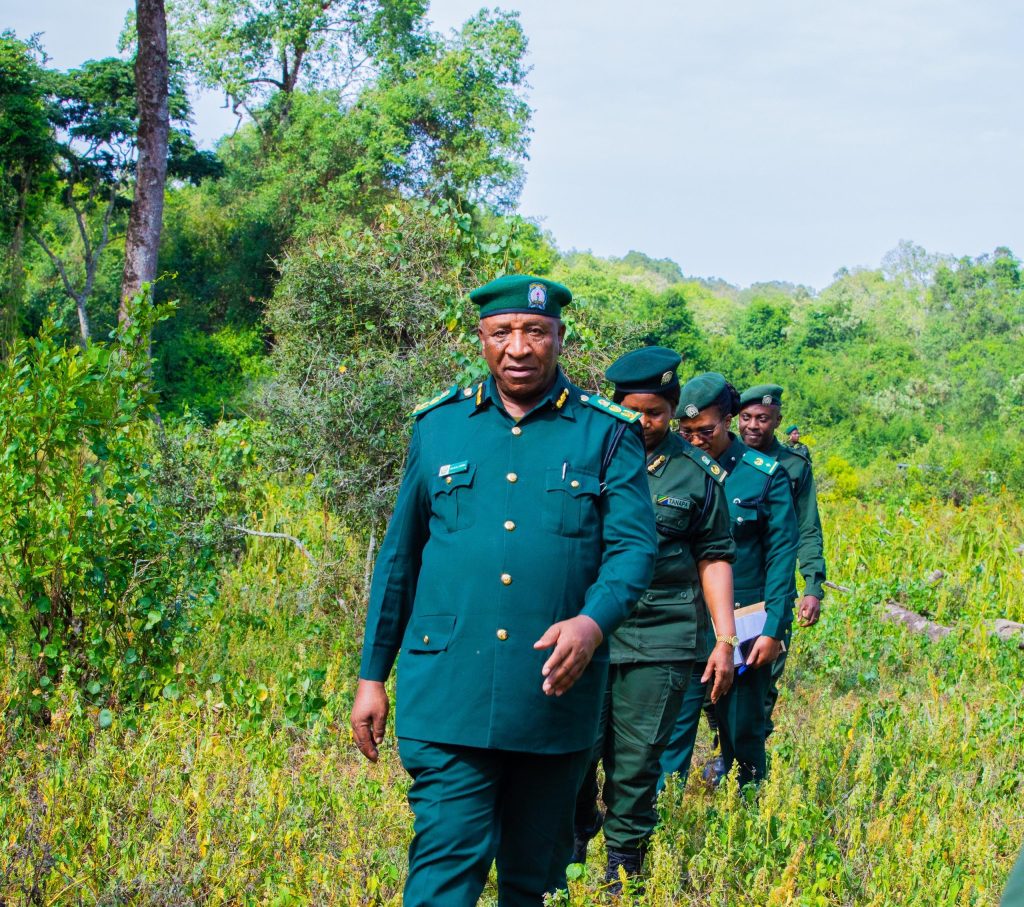
TANAPA Conservation Commissioner Musa Nasoro Kuji
According to TANAPA Conservation Commissioner Musa Nasoro Kuji, the investment forms part of a broader national policy aimed at ensuring that infrastructure development complements conservation while promoting sustainable economic growth.
“Our policy objective is to ensure that infrastructure development supports conservation rather than compromises it,” he said.
“Reliable transport infrastructure strengthens park management, improves visitors’ experiences, enhances emergency response capabilities and contributes to sustainable tourism while safeguarding the ecological integrity of the Serengeti for future generations.”
Developing infrastructure within the Serengeti presents unique engineering challenges, as every project must meet strict environmental standards designed to protect one of the world’s most sensitive ecosystems.
TANAPA engineer Abubakari Avanda Mshamu said all construction works are being undertaken with careful consideration of the park’s ecological value and its international conservation status.
“Every infrastructure intervention inside the Serengeti must meet rigorous engineering and environmental standards. We are ensuring that construction materials and structural designs are fully compatible with the Serengeti ecosystem and its status as a UNESCO World Heritage Site. Our objective is to build resilient infrastructure capable of withstanding extreme weather while preserving the park’s outstanding universal value,” he explained.
The investment underscores Tanzania’s determination to protect an ecosystem that underpins one of Africa’s most valuable tourism economies.
By strengthening transport infrastructure while maintaining the park’s ecological integrity, the government aims to ensure that conservation, tourism and economic growth continue to reinforce one another, securing the future of the Serengeti as one of the world’s greatest natural treasures.