








Summary
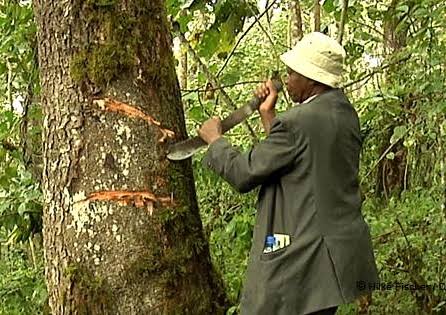
Prunus africana is a rare medicinal tree indigenous to Africa’s montane forests and is globally renowned for its bark extract, commonly known as pygeum, which is widely used in the treatment of benign prostatic hyperplasia (BPH) and other lower urinary tract disorders.
MOSHI: THE Muhimbili University of Health and Allied Sciences (MUHAS) has signed a Memorandum of Understanding (MoU) with the Tanzania Forest Services Agency (TFS) aimed at promoting sustainable production and research of Prunus africana, a highly valued medicinal tree species.
Prunus africana is a rare medicinal tree indigenous to Africa’s montane forests and is globally renowned for its bark extract, commonly known as pygeum, which is widely used in the treatment of benign prostatic hyperplasia (BPH) and other lower urinary tract disorders.
Due to growing international demand and excessive exploitation, the species is currently classified as vulnerable and protected.
MUHAS, one of the country’s leading medical research institutions, is utilizing the tree in ongoing scientific research and the development of potential treatments for prostate cancer and related diseases.
Under the signed agreement, TFS will oversee large-scale cultivation and conservation of the medicinal tree to ensure a sustainable supply for research and pharmaceutical development at MUHAS.
Speaking on the development, TFS Senior Conservation Officer for the northern kilimanjaro forest plantation in Rongai, Mr. Fred Ng’wani, said the plantation has intensified efforts to increase production of Prunus africana seedlings in response to the growing demand under the MoU.
“Initially, TFS produced Prunus africana seedlings only at this plantation, but we later decided to expand production to other plantations in order to meet the increasing demand created by the partnership,” he explained.
Ng’wani said the medicinal tree is currently being cultivated in at least six TFS forest plantations across the country.
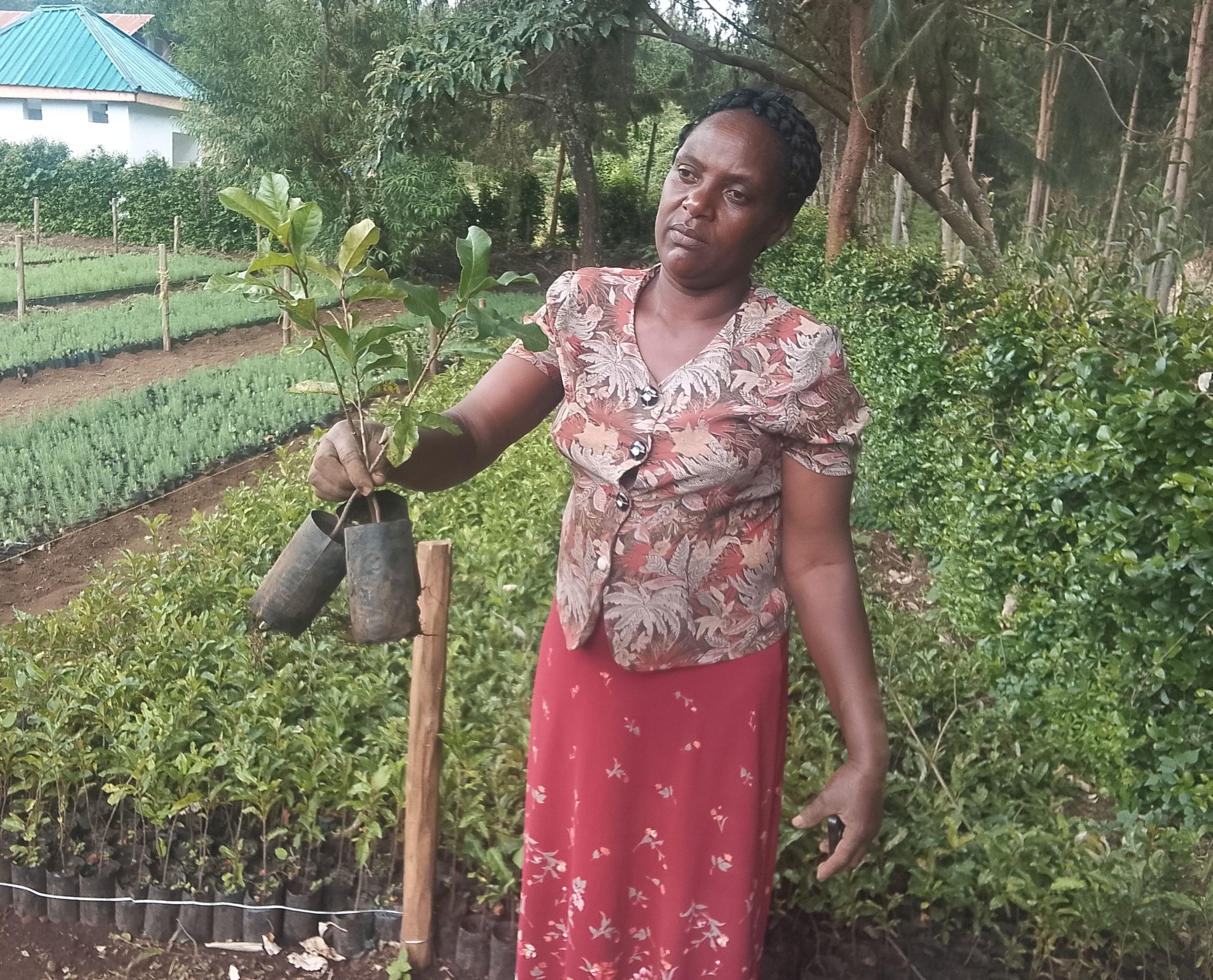
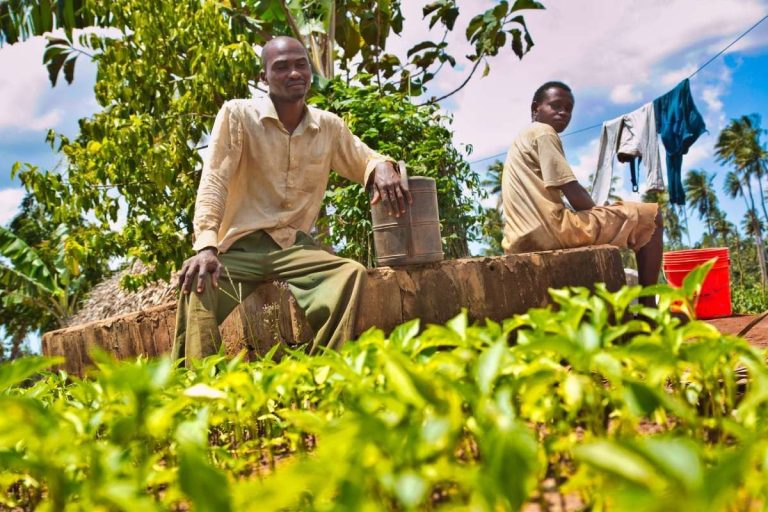
A worker at the northern kilimanjaro forest plantation in Rongai displays seedlings of Prunus Africana
He noted that over the past three years, TFS has produced more than 98,000 seedlings of Prunus africana.
“In the 2025/26 financial year, we are targeting to produce at least 38,000 seedlings at our Rongai plantation alone,” he said.
Apart from Prunus africana, the plantation also grows large quantities of Pinus patula (pine trees), which dominate much of the forest estate.
Ng’wani added that the plantation has successfully ventured into resin tapping from pine trees, a non-timber forest product (NTFP) activity that has become a significant source of revenue.
“The resin tapping project has already generated more than 178 million shillings within just 11 months of operation,” he said.
Resin tapping allows forest growers to generate income while waiting for trees to mature for timber harvesting, making it an important economic activity in sustainable forest management.