










Summary
The project is designed to develop and propagate fast-growing eucalyptus clones tailored to be grown in different ecological zones across Tanzania.
MOROGORO: THE Tanzania Forestry Research Institute (TAFORI) has launched a pioneering scientific project focused on cloning eucalyptus trees, marking a significant step toward strengthening the country’s timber sector.
The initiative is part of broader efforts by the Ministry of Natural Resources and Tourism to enhance productivity and sustainability within Tanzania’s forestry industry, with a particular focus to improve timber tree cultivation.
The project is designed to develop and propagate fast-growing eucalyptus clones tailored to be grown in different ecological zones across Tanzania.
According to Dr. Chelestino Balama, the Director of Forestry Research at TAFORI, the project is already gaining good momentum.
“We are implementing tree biotechnology programs to produce improved eucalyptus hybrid clones with enhanced growth rates, disease resistance, and superior stem quality,”Dr. Balama explained in an exclusive interview.
The project’s central nurseries have been established at Kamwarukanga, within Korogwe District of the Tanga region, as well at Kibaha Lowland Afforestation Research Centre located at Kongowe, Kibaha District, Coastal Region.
Dr. Balama noted that key hybrid varieties being utilized in the robust project mainly include Eucalyptus grandis and Eucalyptus camaldulensis, due to their proven performance in plantation forestry.
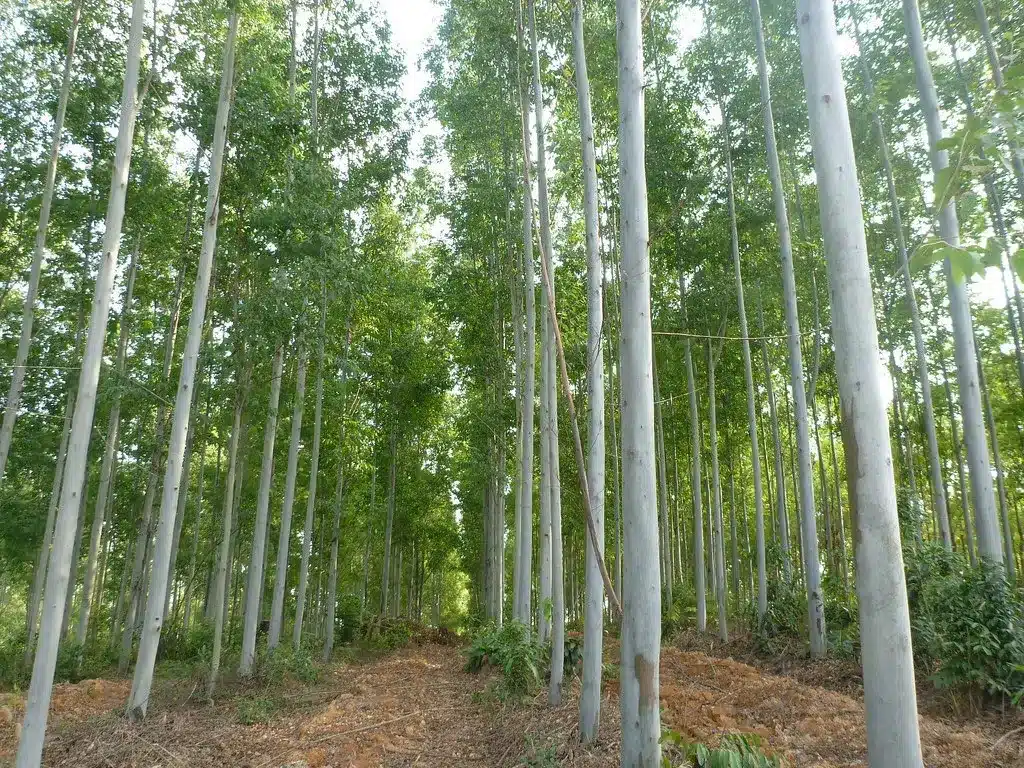
“These clones are specifically adapted for high-yielding timber, poles, and pulp production,” Dr. Balama informed.
He added that initial results have been promising, with the cloned trees demonstrating faster growth, greater uniformity, and stronger resilience to environmental stressors compared to conventional eucalyptus species.
Dr. Balama further highlighted that the project employs vegetative propagation techniques and is expanding to incorporate tissue culture technology. This will enable large-scale seedling production and ensure the consistent quality of the trees.
“Our goal is to develop fast-growing, high-yielding trees with desirable traits such as drought tolerance and high-quality wood—key attributes for poles and timber,” he added.
The initiative represents a forward-looking approach to forestry management in Tanzania, combining tree biotechnology with sustainable practices to meet growing wood demands while supporting ecological resilience.
Production of Eucalyptus in Tanzania
Eucalyptus production in Tanzania covers approximately 25,000 hectares, with significant cultivation driven by private, small-scale farmers and government plantations, particularly in the Southern Highlands (Iringa and Njombe).
It serves as a vital cash crop for high-demand utility poles, fuel wood, and construction timber.
Key Aspects of Eucalyptus Production:
Major Growing Areas: The Southern Highlands are the primary hub, particularly for utility pole production. Key areas for trials and improvement include Mufindi (Iringa), Njombe, and parts of Morogoro.
Key Species and Clones:Common species include E. camaldulensis, E. grandis, E. cloeziana, and E. maidenii. High-performing clones such as GC167, GC15, and GC940 have been identified for superior growth and wood properties.
Market Drivers: Major companies like TANWAT and Green Resources are prominent in the sector. The government (via TANESCO) is a major buyer for utility poles, although a shift towards concrete poles has created market uncertainty.
Production Challenges: Small-scale growers often face challenges regarding technical efficiency and access to quality planting materials.
Research and Improvement: The Tanzania Forestry Research Institute (TAFORI) and the Forestry Development Trust (FDT) play a key role in identifying superior provenances (e.g., E. urophylla on Wetar Island) and testing clonal hybrids to increase wood density and volume.
Key Initiatives and Potential
Smallholder Focus: Small-scale tree farming in areas like Mufindi is crucial to the market, and there is significant effort to improve their efficiency.
Improved Planting Material: The use of improved Eucalyptus clones has been shown to increase productivity significantly.
Production is primarily aimed at high-demand wood products, and strengthening the value chain is considered essential for future development of the forestry sector in Tanzania.