








Summary
Organic farming improves soil health, protects biodiversity, and reduces environmental pollution by replacing chemical inputs with natural and environmentally friendly farming methods.
By Damas Makangale | Dar es Salaam
MORE than 1,000 farmers, 50 small and medium-sized enterprises (SMEs), and traders from across Tanzania have received training on organic farming and sustainable agribusiness from the Sustainable Agriculture Tanzania (SAT).
The training aims to strengthen agricultural value chains, expand market opportunities for organically produced goods, and promote farming practices that are safe for both human health and the environment by reducing reliance on synthetic chemicals.
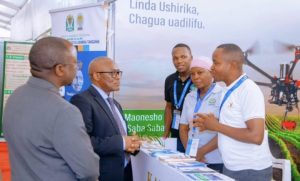
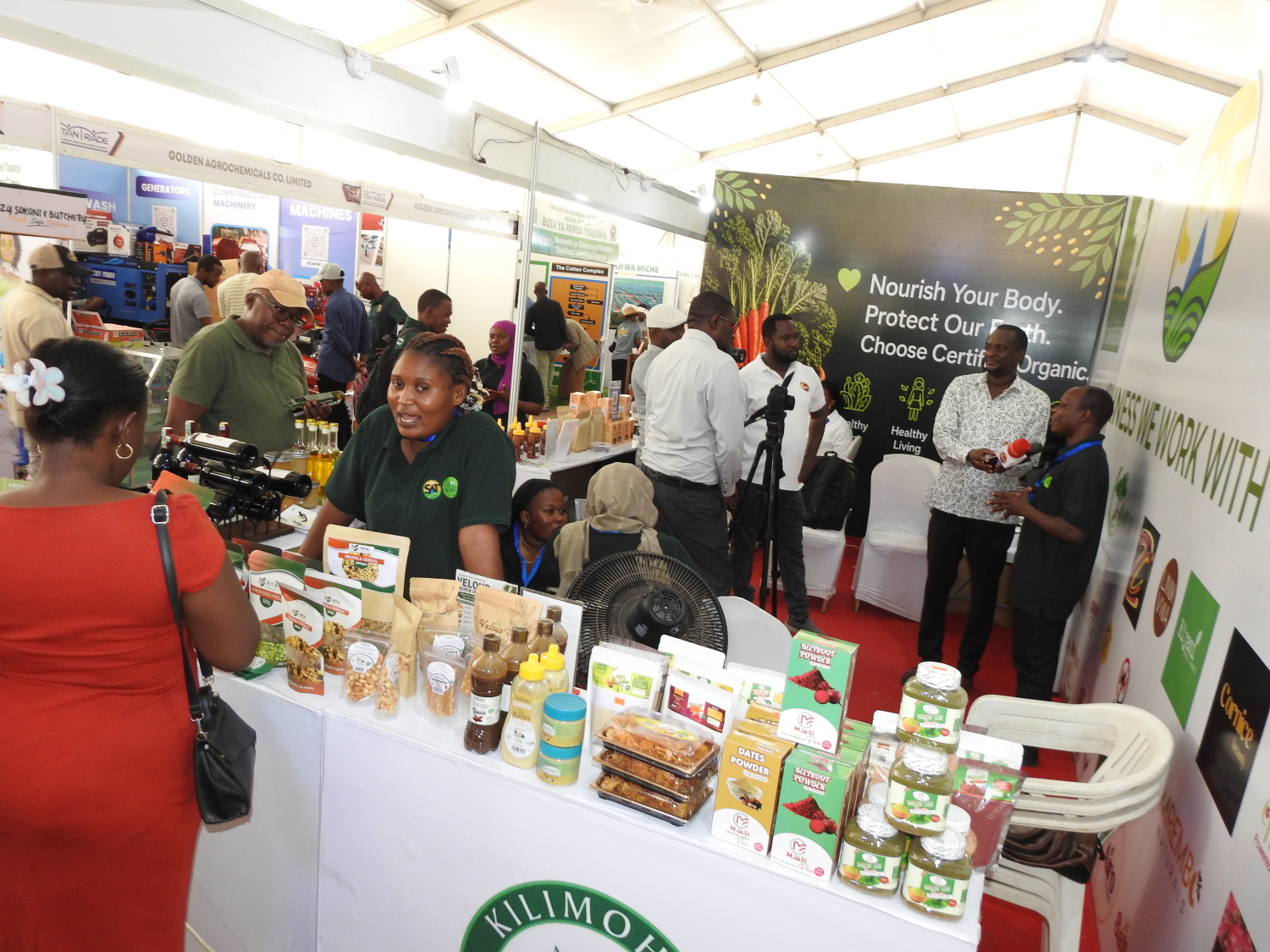
Speaking at the Ministry of Agriculture Pavilion during the exhibition organised by the Tanzania Trade Development Authority (TANTRADE), Sustainable Agriculture Tanzania (SAT) Project Manager, Mr. Peter Mwangalo, said the initiative, funded by the BioVision Foundation of Switzerland has been designed to strengthen the capacity of farmers, traders, and SMEs while creating sustainable markets for organic products across Tanzania.
He noted that they’re using the platform of the ongoing Sabasaba trade fair exhibition to educate the public on ecological organic agriculture.
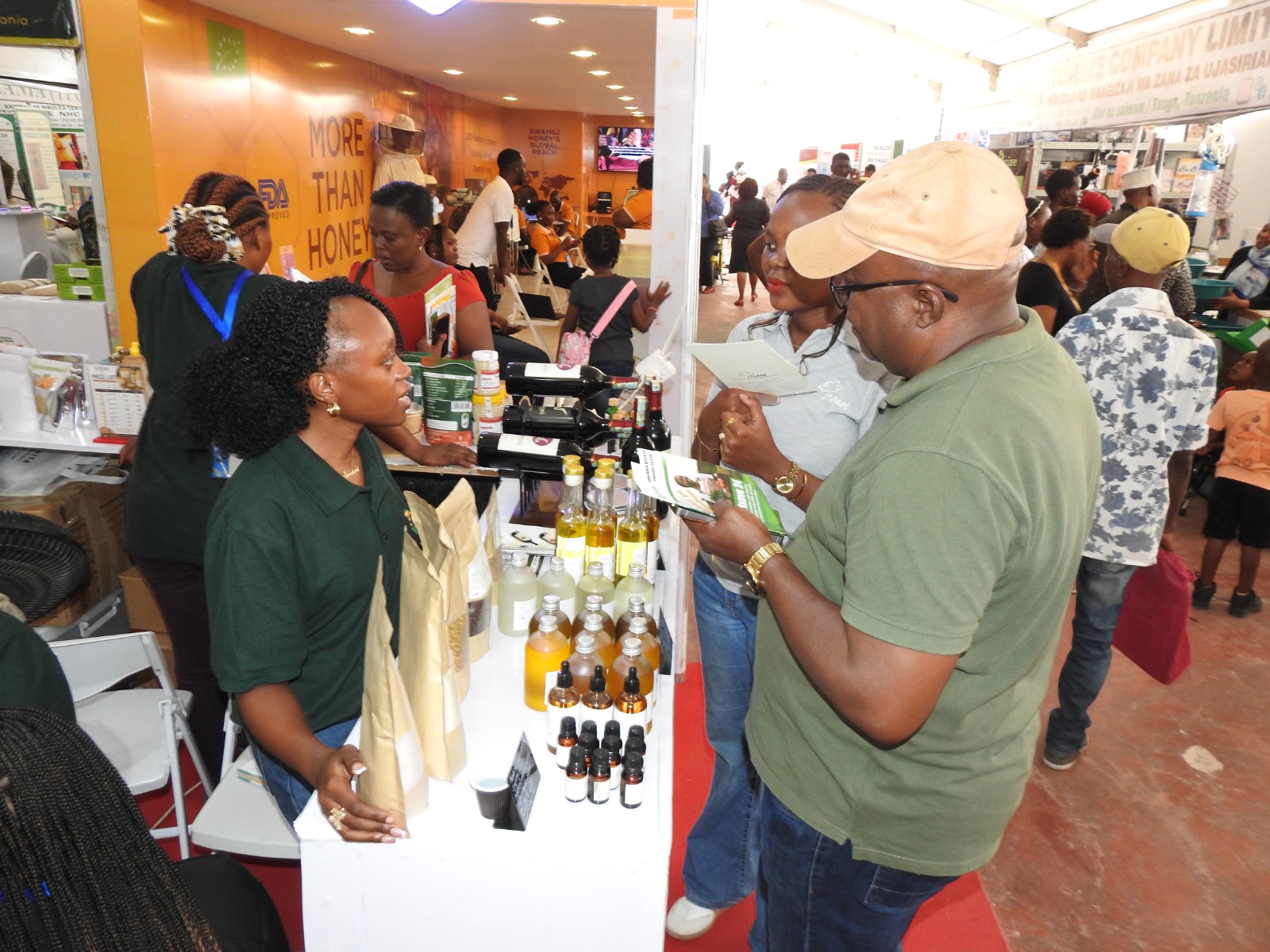
Manager of I Am Organic Shop Dainess Sunday speaks to Dar es Salaam residents at the organisation’s exhibition booth during the ongoing Saba Saba Trade Fair.
“This four-year project seeks to equip farmers, traders, and entrepreneurs with practical knowledge and skills to practise organic farming without relying on industrial fertilisers and synthetic agrochemicals,” Mwangalo said.
He noted that organic farming improves soil health, protects biodiversity, and reduces environmental pollution by replacing chemical inputs with natural and environmentally friendly farming methods.
Mwangalo encouraged visitors attending the Sabasaba exhibition to visit the organic farming booth and learn more about the benefits of organic agriculture and the range of products on display.
Meanwhile, Dainess Sunday, Manager of I Am Organic Shop, said organic products are produced using ecological farming practices that conserve natural resources while safeguarding the health of both producers and consumers.
She said the project focuses on building the capacity of Tanzanian farmers, traders, and entrepreneurs by raising awareness of organic agriculture and strengthening the country’s agricultural value chain.
According to Sunday, consuming organically produced food can contribute to healthier lifestyles by reducing exposure to harmful chemicals often linked to non-communicable diseases.
“We are creating market opportunities for organic farmers both within Tanzania and internationally while increasing public awareness of the health, environmental, and economic benefits of organic farming,” she said.
One of the project’s beneficiaries, Aslatu Nguku of Mama Health Organic Shop in Dodoma, said organic farming has become increasingly important for environmental conservation because of its sustainable production methods.
She noted that demand for organic products continues to rise in many parts of Tanzania as consumers become more conscious of healthy eating and environmentally responsible farming.
The four-year programme has invested approximately Sh1.2 billion to train farmers, traders, and entrepreneurs in organic agriculture and provide them with the practical skills needed to produce high-quality organic products.
So far, the initiative has reached beneficiaries in Morogoro, Dar es Salaam, Njombe, Lindi, Iringa, Arusha, and Kagera, equipping them with knowledge, technical skills, and market information to expand organic farming while promoting environmental sustainability and public health.
Stakeholders say the growing adoption of organic farming has the potential to improve food safety, protect ecosystems, and contribute to a healthier population as demand for chemical-free agricultural products continues to increase.