










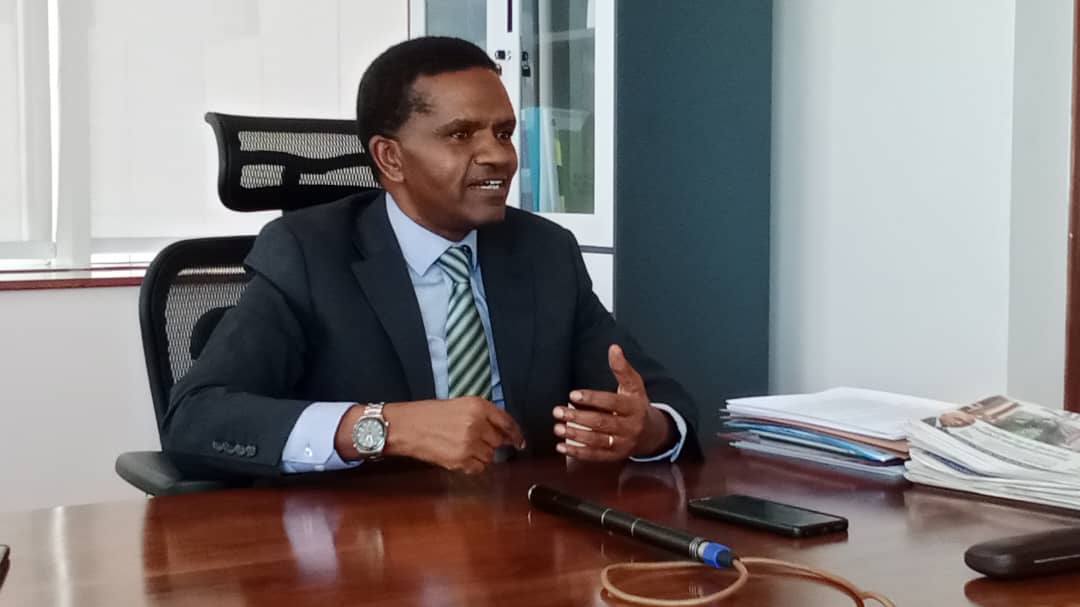
National Planning Commission Chief, Dr Fred Msemwa
The private sector is lifeline of the national economy, thus the commission has realized over the need to give the sector enough room in the implementation of the vision 2050.
DODOMA. THE private sector is expected to play a key role in the implementation of National Development Vision (NDV) 2050 through working in sync with the public sector to drive the national economy.
Developed with an eye to elevate Tanzania into the upper -middle- income -status country, execution of the National Development Planning Vision 2050 will see the private sector working hand in hand with the public sector to champion economic development in Tanzania.
Dr Fred Msemwa, the Executive Secretary (ES) of the National Planning Commission told the publication during an exclusive interview that the private sector is lifeline of the national economy, thus the commission has realized over the need to give the sector enough room in the implementation of the vision 2050.
The commission’s Chief noted that, derived from its innovativeness and pragmatic decisions, the private sector must stand at the forefront in terms of driving the economy of the country.
“The commission is currently finalizing development of the National Development Vision 2050, the draft is now undergoing various approval mechanisms within government cycles,” he briefed.
The intention, according to him, is to ensure the private and public sectors works in sync with the government in order to build the much needed trust in driving the national economy.
ALSO READ https://sematv.co.tz/speaker-meets-planning-commission-chief/
He added, the vision 2050 has been developed out of the key inputs collected from the citizens within different groups from United Republic of Tanzania Mainland, as well as Zanzibar.
“Through the process, the commission has managed to established what exactly the public want regarding to the national economic vision,”
“We have compiled the feedback we received from the Tanzanians, and so far worked to put their expectations in the manner that they can be executed effectively through the National Development Vision 2050,” Dr Msemwa insisted.
Going into details, he unveiled that the Tanzanians need better health, better roads, and attentive government which works to being about needed development.
“This is coming from the government framework which is part and parcel of the national development vision 2050,” he expressed.
Looking at the economic aspirations through basing on the collected feedback, he said it appears that the Tanzanians would wish to have the very competitive economy, in a sense to be able to compete regionally and internationally.
Dr Msemwa said the national development vision 2050 has been developed with three key pillars, including competitive economy, human capital development and environmental conservation and protection.
“The country have recently witnessed a radical shift in terms of rainfall patterns and natural calamity, being caused by climatic change,”
” The situation requires the government to pay attention and be able to manage the risks that may crop- up out of climate change,” he added.
Development of the vision 2050 comes necessarily after end of implementation of the national development vision 2025, which started to be implemented since 2021.
Tanzania’s Vision 2050 is a long-term development plan aiming to transform Tanzania into a high-income, inclusive, and sustainable economy by 2050.
It focuses on economic transformation, human capital development, and environmental sustainability. Key goals include achieving an average annual Gross Domestic Product (GDP) growth rate exceeding 8 percent increasing GDP per capita to $12,000, and universalizing access to quality education, health, and other essential services.
The Planning Commission plays a crucial role in national development by managing the economy, directing the planning process, and supervising the implementation of approved economic and social plans. It also assesses national investment resources, analyzes economic trends, and advises the government on resource allocation and policy adjustments.