







Summary
IN recent years Tanzania has positioned itself in the global green economy through its mineral wealth, which is currently in high demand worldwide our correspondent, DAMAS MAKANGALE , interviewed mining guru , Engineer Asa Mwaipopo about the benefits and challenges of the mining sector.
QUESTION: Since you have worked in the mining sector for several years, you have experienced some changes in this sector. Can you share what has improved in Tanzania’s mining sector and how it benefits the country’s economy?
ANSWER: Thank you, what has significantly improved and the results are obvious is the revenue collections. I would attribute the outcome due to simplified marketing of minerals especially gold and gemstone by reaching out to where the source is and establishing Minerals Markets at Regional and some Districts’ towns which are producers of such minerals. The simplification went hand in hand with tightening of movements of minerals and samples. Statistics confirms that the Government collection from minerals rose to Tshs1.071Trillion in 2024/25 which is post the changes from Tshs56.89Billion which was collected in 2016/17 e.g. before the changes. While there is an element of price rise for gold, but the main reason lies behind the changes and its implementation. While there is improvement in integration of the Mining Sector into our local economy through the local content regulations, there are areas that need more attention since a monopoly to some businesses is increasing and the administration of local content regulation causes inefficiencies in some procurements.
QUESTION: A few weeks ago, you presented a paper during Research and Innovation Week at the University of Dar es Salaam (UDSM). How can Tanzania leverage its mineral resources for a green economy?
ANSWER: Green Economy has resulted in increased demand of some minerals needed in the Batteries technology. The most surged in demand is Lithium followed by Graphite. Currently about 50 percent of graphite use, is in Battery anodes for Electric vehicle. Tanzania has graphite deposits in Mahenge and Lindi and the Geology to support more discoveries. Tanzania may benefit more by positioning itself to be a significant player and reliable supplier of such minerals. In other words, explore more, build more and mine more. No one is guaranteed of technological changes, it can change for the better, well-and-good; but it can change for the worse and shocks to the demand and consumption of some minerals. Making the most of today is the best way to leverage into the growing green economy.
QUESTION: Tanzania has critical mineral deposits, including nickel in Kabanga, graphite in Mahenge and Lindi, and rare earth elements in Mbeya and Morogoro. Yet, none of these have been fully utilised, even as global demand for the green economy rises. What can Tanzania do to position itself for these opportunities and leverage its mineral wealth for socioeconomic development?
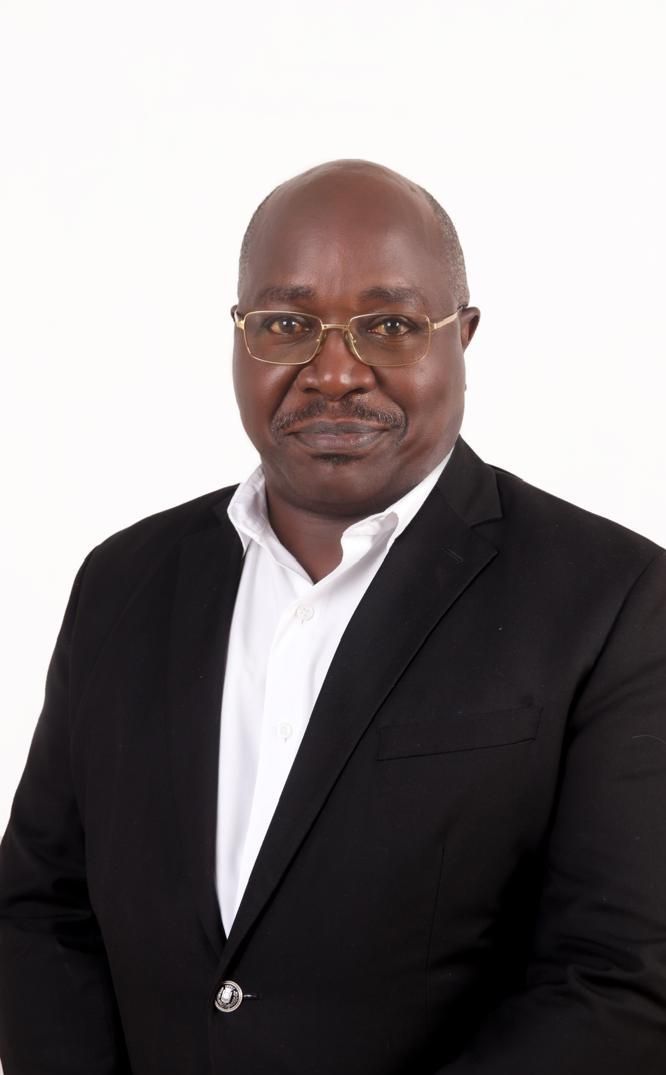
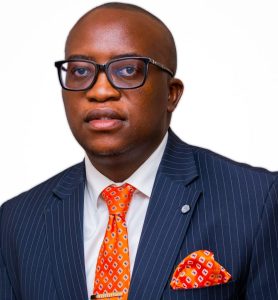
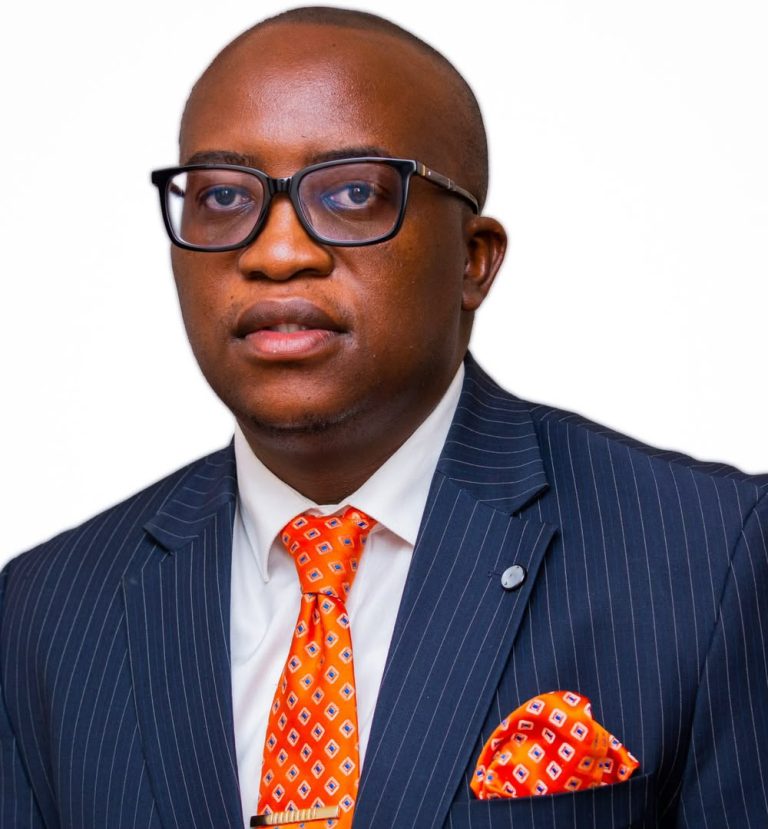
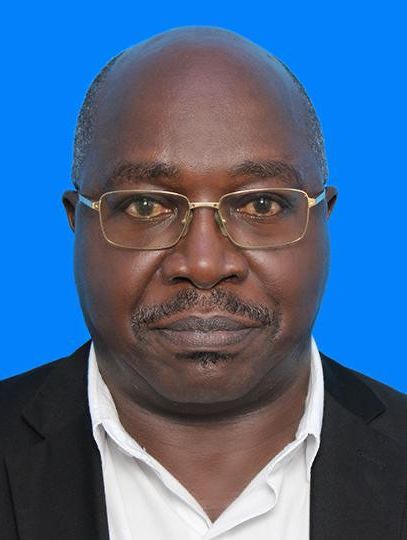
Engineer Asa Mwaipopo
ANSWER: The deposits you mention are very recent findings save for Nickel in Kabanga. I think Government has played its part by fully permitting most of these Projects, hence what is left is for the developers to securing funds ahead of their final investment decision (FID). While Kabanga Nickel was also fully permitted before, it now has a new investor. Hence the Government is in discussion before the final permitting. In my view the fact that we have an investor ready to go, it is to our advantage to move forward quicker with the most feasible approach. Our position on Nickel when compared to other deposits globally and the geographical location of Kabanga Nickel compared to deposits in Indonesia, (even though theirs are latellitic hence complex to process compared to ours which is sulphides) all factors put together, we aren’t that much advantaged. The “what if ?” needs to be asked and be given a fair, balanced and reasonable approach to arrive at a decision which would expedite such a huge capital investment of over a Billion US$ into Tanzania. Capital is mobile; hence it can go anywhere, we should make effort to make it flow our way.
QUESTION: Tanzania holds 900,000 tonnes of rare earth elements (REE), which is about 1 per cent of global reserves. Meanwhile, China dominates with 44 million tonnes (65 percent) of these minerals, which are essential for modern technology, clean energy, and electronics. What steps should Tanzania take to become a reliable supplier in the global market as demand for green energy minerals grows?
ANSWER: REE which are a group of 17 naturally occurring metallic elements that are essential for modern technology, clean energy, and electronics is another opportunity for Tanzania to tap into the Global Green economy drive. Despite the name, most rare earth elements are relatively abundant in the Earth’s crust. They are only considered “rare” because they are rarely found in concentrated quantities and economically viable deposits; furthermore, they are difficult and expensive to extract and refine. Tanzania has two known deposits for REE being in Mbeya and Morogoro, of which despite its insignificancy, it provides a good starting point and a confirmation of the Geology which support more finding. Tanzania should continue the path of promoting more and more exploration for REE, provide incentives to developers so as to produce more hence make Tanzania become significant Player. In industrial minerals, commanding a significant position is what matters in attracting other players beyond the mine gate to explore value add opportunities.
QUESTION: Tanzania holds 18 million tonnes (6 per cent) of global graphite reserves, while Mozambique holds 25 million tonnes (8.6 per cent), Madagascar holds 27 million tonnes (9 per cent), and China leads with 81 million tonnes (28 per cent). If these African nations collaborate, they could control a significant share of the global graphite supply. What is your advice on how to boost local graphite production and maximise its economic impact?
ANSWER: My advice is to remind the decision makers, the same old adage that “Umoja ni Nguvu”! (There is Strength in Unity). E.g. if these three; all being SADC member countries could somehow collaborate on the Graphite production, they would form a significant base, whose economic impact will be critical enough to attract value add or other downstream industries in the Battery value chain.
QUESTION: Tanzania has dropped from the third to the fourth gold producer in Africa, despite previously producing 50 tonnes of gold per year. What is behind this decline, and what needs to be done to improve production and climb back up the rankings?
ANSWER: Importantly here is to look at whose production has gone up or gone down and why? South Africa back in the 1990s used to produce over 600tonnes per annum and was the leading producer in Africa as well as globally. It has now come down to 100tonnes per annum. In the same 1990s Ghana was producing about 60tonnes per annum, today Ghana is producing 120tonnes per annum, doubled their production. In these respective years, Tanzania was producing 55tonnes and now we are at 66tonnes or about. You look at the mines that have closed and no new big mine have been commissioned for nearly 15 years. South Africa has depleted its Gold Ore Reserves due to centuries of mining. Ghana has continued to stretch its Geology and commissioned several new mines. That is what Tanzania needs to do to continue the gold race by de-risking exploration, attract more players in exploration space and provide incentives to “the shovel” ready projects. These incentives may not necessarily be financial; they could be in infrastructure and other administrative hurdles which slow or hinder speedy development of new mines.
QUESTION: In your presentation, you mentioned local skill shortages in specialised engineering, technical, and chemical fields required for advanced processing. However, UDSM is partnering with Barrick Mining Corporation to train and empower fresh graduates with technical know-how and research capabilities. What are your views on this initiative?
ANSWER: The initiative is excellent and most welcome, but my take is that it is not meant to address the issue which I raised of lack of Research in the Minerals space, the kind of MINTEK which South Africa established years ago, whose successes is the Carbon in Pulp (CIP) technology in the gold processing, amongst others. When technologies; like for processing certain minerals become restricted and center stage of Geopolitical tension, it should be a catalyst for Research and Development (R&D) for home grown solutions, in the long term. Such centers could be at the Universities or at Minerals based Institution or collaborate with the already existing centers. Tanzania as an example is hosting the African Minerals and Geosciences Centre at Kunduchi in Dar es salaam. MINTEK of South Africa is already researching in Processing technology for REE. Therefore, I intended to challenge us ourselves, to see the restrictions and Geopolitics as a catalyst to embarking on Research for a lasting solution though own research centers or some collaborative efforts at Local or Regional level.
QUESTION: Recently, the Tanzanian government engaged financial institutions to support the mining sector—especially small-scale miners—by improving access to loans and capital. What is your take on this move, particularly in relation to a Mineral Wealth Sovereign Fund?
ANSWER: Mineral Wealth Sovereign Fund and lending small scale miners are two separate matters. Mining business is risky and not very well understood, hence financial institutions tend to shy away from financing mining. However, Mining is a business that can be planned, executed to the plan with tolerable limits and return investment. Therefore, it is a good move for the Government to engage financial institutions to support medium and small-scale miners; as long as there is a justification for the loans and the purpose is feasible and bankable.
Mineral Wealth Sovereign Fund on another hand, is savings of a portion of today’s non-renewable mineral resources earnings and investing into stable instruments, like the international markets to secure wealth for future generations, hence serve as an intergenerational equity in the long term. It can as well serve in short terms for macroeconomic stabilization; acting as a financial buffer when global mineral prices drop. When it happens, the Sovereign Fund can inject funds into the national budget, preventing cuts to essential social services, like healthcare, and education. It was very pleasing to hear the Minister’s comment that the Government has already taken a decision to establish the Sovereign Mineral Wealth fund hence join peer countries like Zambia, Ghana, Namibia and Botswana.
Veteran mining engineer Asa Mwaipopo explains how Tanzania can harness its vast reserves of graphite, nickel, rare earth elements and gold to drive economic growth, attract investment, create jobs and become a major player in the global clean energy transition.