





Summary
The initiative is a three-year programme currently operating in six local government authorities within Dodoma Region, namely Dodoma City, Chamwino, Bahi, Chemba, Kondoa District Council and Kondoa Town Council.
DODOMA: For hundreds of women across Dodoma Region, entrepreneurship is no longer just a dream but a reality made possible through the Tuinuke Pamoja Project, a life-changing initiative that is helping women gain financial independence, strengthen their voices, and access lucrative markets across Tanzania.
The project, whose name means “Let’s Rise Together,” is being implemented by the Aga Khan Foundation with financial support from the Embassy of Ireland in Tanzania.
Since its launch, it has emerged as one of the region’s most impactful community development programmes by combining women’s economic empowerment with gender equality, entrepreneurship development and market access.
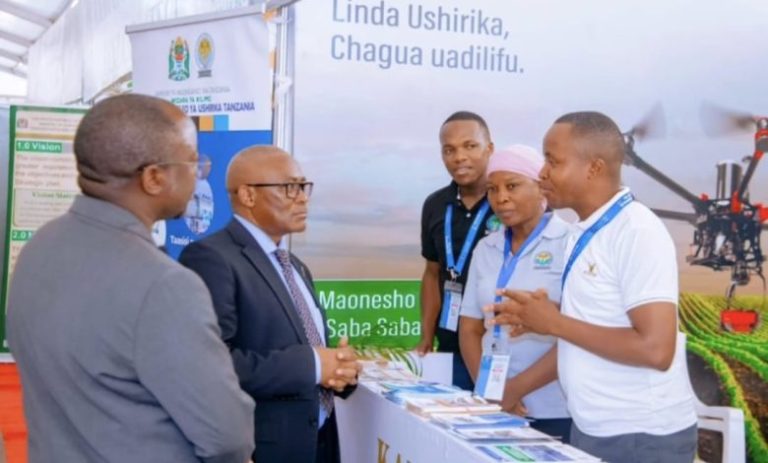
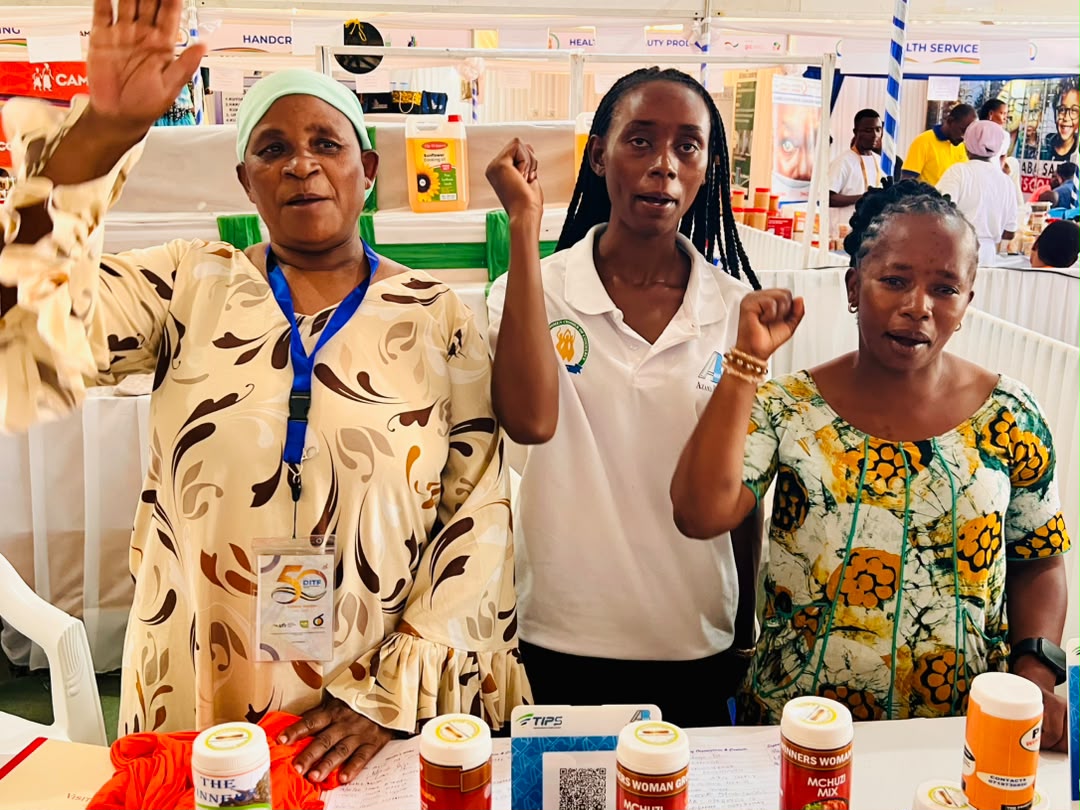
Its growing success was on full display during the 50th Dar es Salaam International Trade Fair (DITF), popularly known as Sabasaba, where women entrepreneurs from rural Dodoma proudly showcased an impressive range of locally manufactured products including liquid soap, bar soap, shampoo, batik fabrics and poultry products.
Only a few years ago, many of these women lacked both the technical skills and confidence to produce quality goods capable of competing in formal markets. Today, they are engaging directly with customers, negotiating business deals and building commercial networks that stretch far beyond their villages.
The colourful exhibition demonstrated how strategic investment in women can transform entire communities. Visitors to the Tuinuke Pamoja stand witnessed not only quality products but also inspiring stories of resilience, determination and economic transformation.
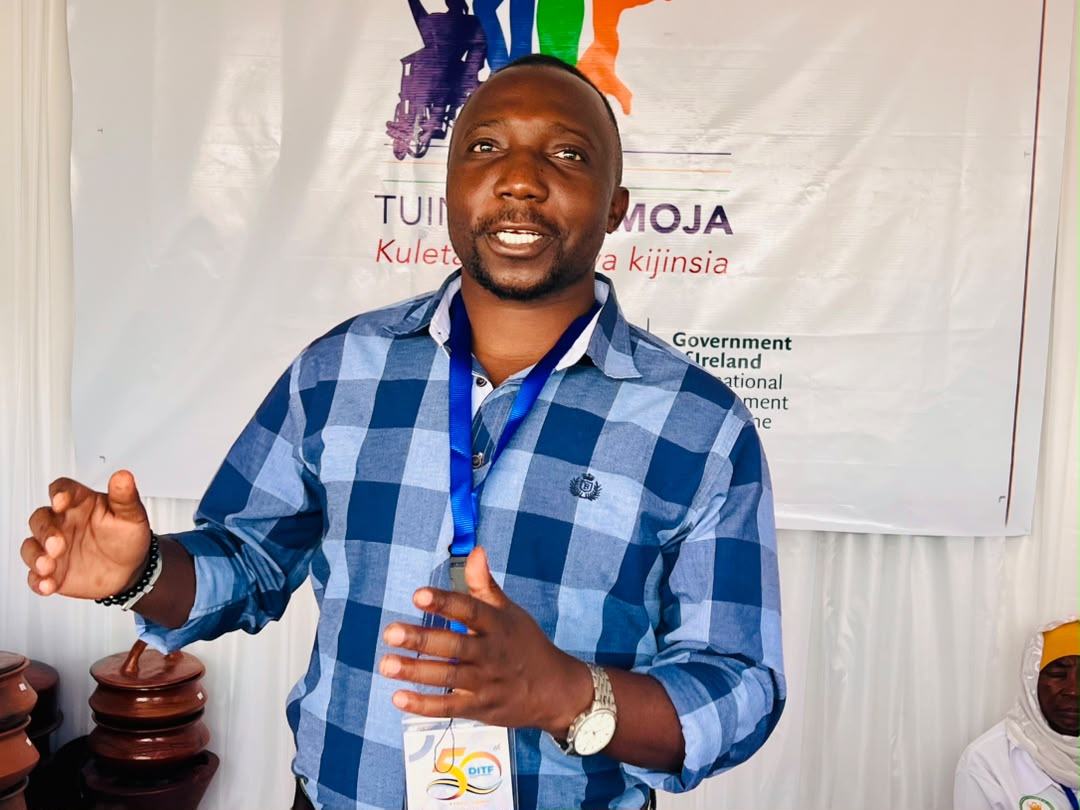
Speaking at the exhibition grounds, Tuinuke Pamoja Project Officer Nahumu Fungo said the initiative is a three-year programme currently operating in six local government authorities within Dodoma Region, namely Dodoma City, Chamwino, Bahi, Chemba, Kondoa District Council and Kondoa Town Council.
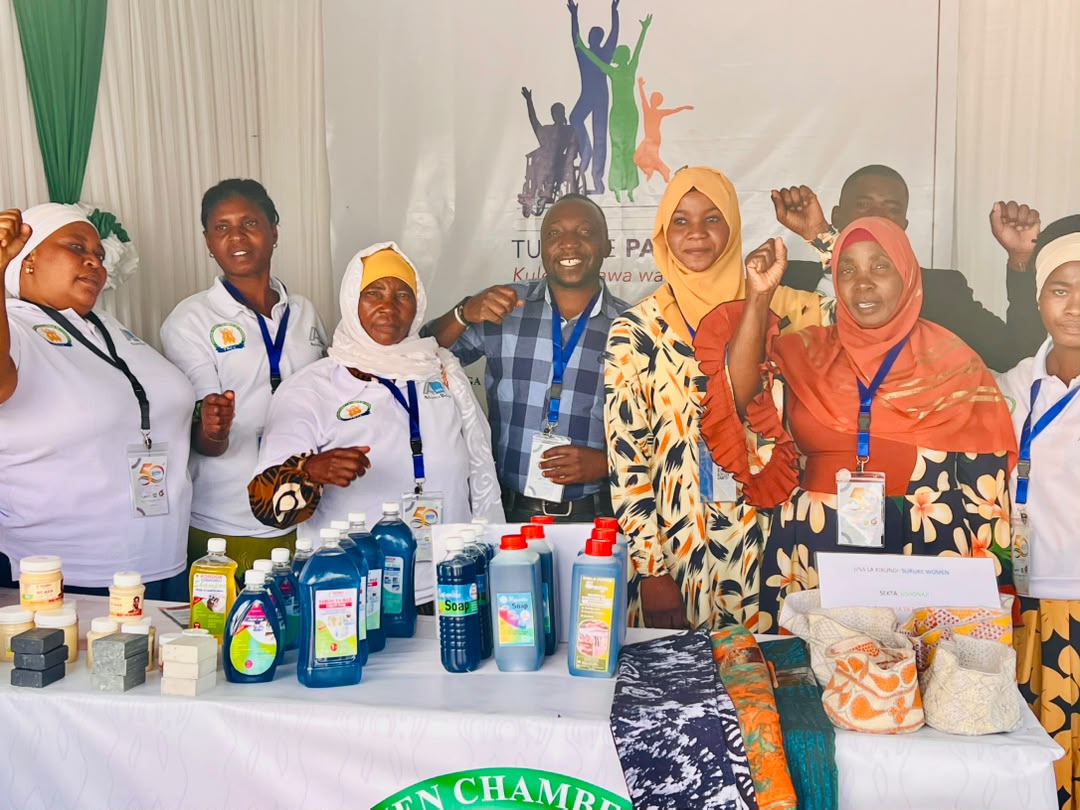
According to Fungo, the project’s primary objective is to strengthen community groups so they can collectively advocate for gender equality while building sustainable businesses capable of improving household incomes and reducing poverty.
“Our goal is to empower women to become economically independent while ensuring they have a strong voice in promoting gender equality within their communities,” he explained.
Unlike many development programmes that target individuals, Tuinuke Pamoja brings women together into organised groups where they learn collectively, share production resources, exchange experiences and strengthen their bargaining power in the marketplace.
Fungo said the project also plans to extend its reach to Mpwapwa and Kongwa districts before its completion, enabling even more women from rural communities to benefit from the programme’s interventions.
He stressed that gender equality should not be viewed solely as a social justice issue but as a key driver of economic growth and sustainable development. When women receive the right skills, financial knowledge and market opportunities, families become more resilient and local economies flourish.
As part of the initiative, participating women regularly attend forums that combine entrepreneurship training with discussions on leadership, financial management, gender equality and business development. These platforms also allow members to exchange ideas and learn from one another’s experiences.
The project further addresses gender-based violence, recognising that women cannot fully participate in economic activities if they continue to face discrimination, abuse or unequal treatment at home and within society.
“Women cannot build successful businesses if they are constantly facing discrimination or violence. That is why our economic empowerment programmes go hand in hand with education on equality, respect and human rights,” Fungo said.
Participation in this year’s Sabasaba exhibition marked a significant milestone for the project. Out of numerous women’s groups supported by Tuinuke Pamoja, ten groups were selected to represent Dodoma Region at one of East Africa’s largest trade exhibitions.
For many participants, the event was their first opportunity to travel outside Dodoma, interact with entrepreneurs from different regions, engage with government institutions and meet potential buyers interested in their products.
The exhibition was designed to achieve three major objectives: showcasing products manufactured by women entrepreneurs, exposing participants to modern packaging and branding techniques, and creating long-term market linkages that can expand their businesses beyond local markets.
“We expect these women to return home with valuable business knowledge, improved marketing skills and strong networks that will continue generating opportunities long after the exhibition has ended,” Fungo noted.
To ensure the project’s impact remains sustainable, Tuinuke Pamoja has established strategic partnerships with key public and private institutions that continue supporting women even after the project’s implementation period.
Among the major partners is the Small Industries Development Organization (SIDO), which provides practical training on entrepreneurship, product development, quality improvement and business management. Other partners include the Tanzania Women Chamber of Commerce (TWCC) and private companies specialising in value addition and product marketing.
“These partnerships are extremely important because SIDO equips women with technical production skills, TWCC links them to wider business networks, while private sector partners help improve product quality and competitiveness for both local and international markets,” Fungo explained.
Behind every product displayed at Sabasaba lies a powerful personal story of transformation. For many beneficiaries, the project has restored confidence, created employment and given them hope for a more secure future.
One of those beneficiaries is Shamira Ibrahim Athumani, a member of the Kondoa Women Group, whose members produce liquid soap, bar soap, shampoo, batik fabrics and engage in poultry farming.
Shamira recalled that before joining Tuinuke Pamoja, their production methods were basic and inconsistent. “We used to make soap in ordinary buckets without proper measurements. The quality was poor and we struggled to sell beyond our village because customers lacked confidence in our products,” she said.
Following extensive training in product processing, entrepreneurship, poultry farming and gender equality, the group’s production standards improved dramatically. “Today we measure every ingredient correctly. Our soap has better quality, our shampoo is gentle on the scalp and customers now trust our products because they meet acceptable standards,” she explained.
The exposure gained at Sabasaba has also opened entirely new business opportunities. “Here we met buyers who immediately asked for 200 bottles of our products. Previously, selling just 10 bottles in a week was considered a great achievement. This experience has completely changed our expectations,” she said.
Another beneficiary, Peter Alocye Msambazi from the Mafanikio Hub Group in Chemba District, described participating in the national exhibition as a life-changing experience that exposed members to improved production methods, customer relations and modern marketing strategies.
Similarly, Esther Kapurwa, Chairperson of the Girls Power Group in Chamwino, said the project’s greatest contribution was not financial assistance but knowledge and practical skills. “Knowledge is something nobody can take away from you. Our dream now is to see our soap, batik products and other goods being sold not only in Dar es Salaam and Arusha but also in international markets,” she said.
As the Tuinuke Pamoja Project continues expanding its reach, it is becoming far more than a development initiative. It is nurturing a new generation of confident women entrepreneurs who are creating jobs, improving family incomes and contributing to Tanzania’s broader economic transformation.
For beneficiaries like Shamira and many others, the project has brought more than business opportunities—it has restored dignity and recognition. “We were invisible before,” she reflected. “Today people know our products, they know our names and they respect our work. That is the true meaning of Tuinuke Pamoja—rising together.”