








Summary
Implementation of the National Development Vision 2050 places environmental sustainability at the centre of Tanzania’s long-term development strategy, recognising climate resilience as a critical pillar for future economic prosperity.
DODOMA: THE government, through the Vice President’s Office (Union and Environment), has officially begun implementing the 2026/27 national budget alongside the National Development Vision 2050, with environmental conservation and climate resilience emerging as key national priorities.
The rollout follows the start of the 2026/27 financial year on July 1, ushering in a new phase of Tanzania’s long-term development agenda aimed at promoting sustainable economic growth, strengthening environmental protection and expanding opportunities in the blue economy.

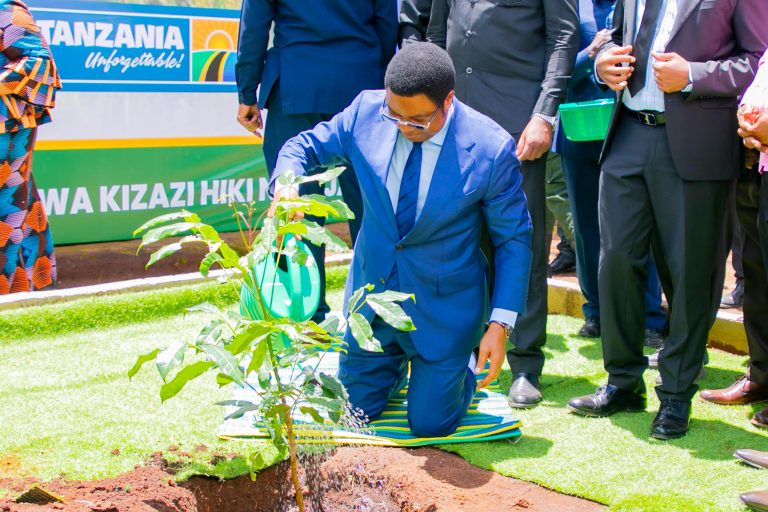
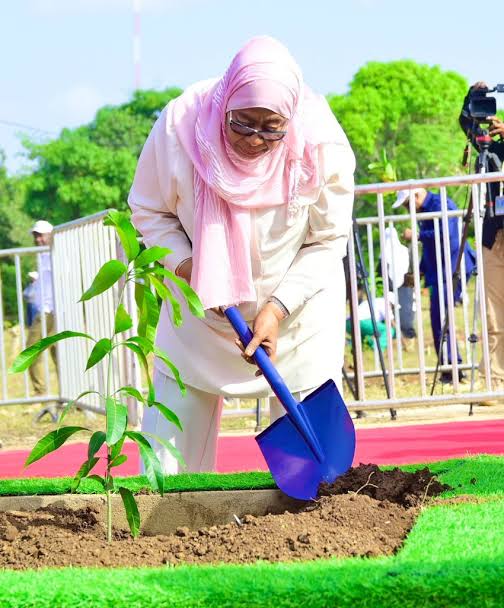
Minister of State in the Vice President’s Office (Union and Environment), Eng. Hamad Yussuf Masauni (L), during a tree planting campaign.
Parliament approved 99.9bn/- for the Vice President’s Office in the 2026/27 fiscal year to finance its core mandates, including safeguarding the Union between Tanzania Mainland and Zanzibar, enhancing environmental management, and advancing the country’s blue economy agenda.
Presenting the ministry’s budget and responding to parliamentary debates, the Minister of State in the Vice President’s Office (Union and Environment), Eng. Hamad Yussuf Masauni, outlined major achievements recorded in managing Union affairs.
He said the country should now shift its focus from debating challenges facing the Union to harnessing the vast opportunities it offers, noting that the Joint Committee of the Governments of the United Republic of Tanzania and Zanzibar has continued to make significant progress in resolving outstanding Union matters.
On environmental conservation, Eng. Masauni said the government is intensifying measures to protect natural resources while creating new economic opportunities through carbon trading and the sustainable development of the blue economy.
The minister emphasized that the implementation of the National Development Vision 2050 places environmental sustainability at the centre of Tanzania’s long-term development strategy, recognising climate resilience as a critical pillar for future economic prosperity.
During the parliamentary question-and-answer session, the Deputy Minister in the Vice President’s Office (Union and Environment), Reuben Kwagilwa, responded to lawmakers on behalf of the minister.
Among the highlights was the government’s success in enforcing the ban on prohibited plastic bags. He said the production and importation of banned plastic bags have fallen by 95 percent, marking a major milestone in reducing plastic pollution and protecting the country’s environment.
The Deputy Minister also announced that the government is preparing to launch a 1.3bn/- climate resilience project in Zanzibar, funded by the Green Climate Fund (GCF). The project is expected to commence after the completion of an ongoing climate change impact assessment.
In addition, the government reaffirmed its commitment to attracting private sector investment in waste management, particularly in the collection, recycling and processing of organic waste from hotels, markets, households and other major sources.
The initiative is expected to strengthen environmental protection while promoting a circular economy and creating new green business opportunities.