










To further boost export potential, several initiatives have been implemented.
These include the Market Access Dossier—developed in collaboration with the FAO—which aims to secure access to markets in 14 countries, including the EU, USA, China, and South Africa. This initiative could unlock potential markets valued at $3.4 billion.
DODOMA. Tanzania is working to rapidly advance its regional and global standing in Irish potato production, driven by ambitious initiatives under the Agricultural Growth Corridors of Tanzania (AGCOT).
As part of a national strategy to revolutionize the agriculture sector, cultivation of this important cash crop has expanded to more regions, with farmers receiving training in modern agronomic practices.
Currently, Tanzania is a major producer of Irish potatoes in Sub-Saharan Africa, ranking as the 6th largest in Africa and 45th globally.
AGCOT Chief Executive Officer Mr. Geoffrey Kirenga explained in an interview with the publication that the program has enabled farmers in new regions to begin growing the crop.
“For years, production was concentrated in the Southern Highlands of Tanzania, covering nearly 220,000 hectares. This area benefits from a unique bimodal rainfall pattern that allows for two harvests annually,” he said.
He revealed that, through renewed efforts, production has now expanded to the regions of Morogoro, Ruvuma, and Sumbawanga.
As part of its role in transforming the Irish potato industry, AGCOT initiated special pilot trials featuring farmer-to-farmer training and demonstration plots. These efforts are designed to provide practical agronomic knowledge to farmers in new regions.
“The trials were very successful. Farmers in the new regions, especially in Gairo District of Morogoro, have embarked on large-scale production this season,” Mr. Kirenga stated.
With the introduction of high-yielding certified varieties like Sagitta, Kirenga expressed optimism that farmers will achieve bumper harvests, pushing the sector to new heights.
He noted that with this hybrid variety, farmers can yield over 22.4 tons per hectare if they follow recommended growing practices.
Mr. Beno Mgaya, a lead farmer and AGCOT beneficiary from Njombe, highlighted several challenges facing farmers in the industry.
He listed key bottlenecks such as poor infrastructure, especially roads from production areas to markets—pests and diseases, low-quality storage facilities, and climate change.
“The lack of adequate standard storage facilities remains a major barrier preventing local farmers from benefiting from expanded international potato markets,” Mr. Mgaya said.
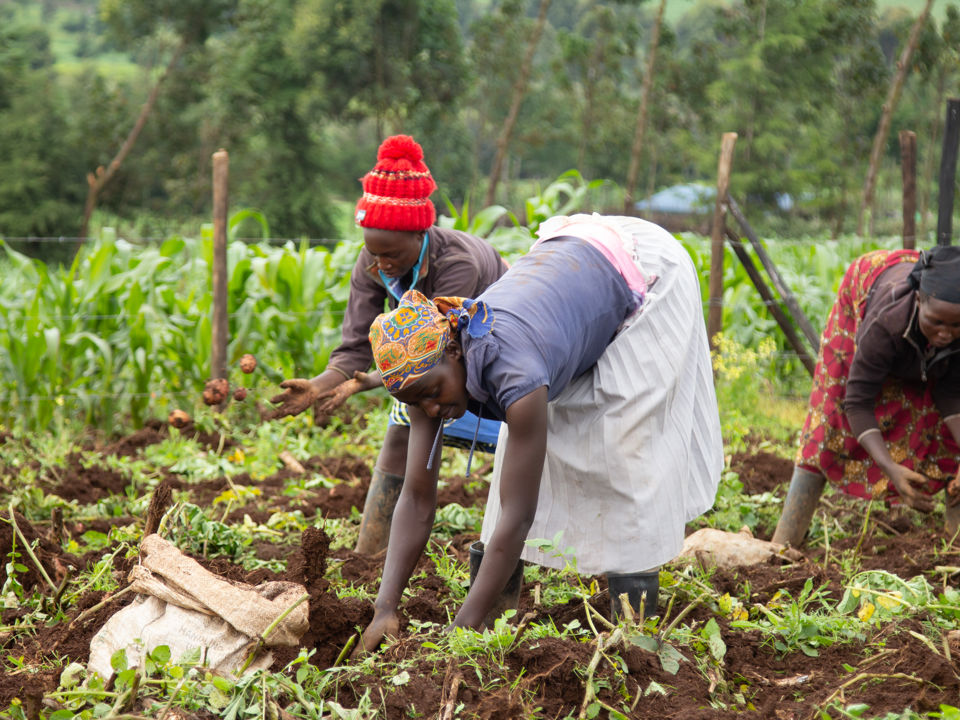
He called on the government to collaborate with key stakeholders in the value chain to ensure the availability of standardized storage towers, which would help meet international quality requirements for exported potatoes.
Mgaya also emphasized the need for further intervention to improve the quality of processing and packaging for Tanzanian potatoes.
Irish potato production in Tanzania is a rapidly growing sector, with an average annual growth rate of 11 percent.
Current export markets include Uganda, Rwanda, the Democratic Republic of Congo (DRC), Comoros, South Sudan, South Africa, and Kenya, which together account for over 90 percent of exports.
To further boost export potential, several initiatives have been implemented.
These include the Market Access Dossier—developed in collaboration with the FAO—which aims to secure access to markets in 14 countries, including the EU, USA, China, and South Africa. This initiative could unlock potential markets valued at $3.4 billion.
For its part, the government has been working to improve policies and promote initiatives such as disease-resistant potato varieties, training for farmers on best practices, and supporting farmer groups for collective marketing and input access.