









Summary
The Forum comes at a critical time as the EAC advances implementation of key regional digital frameworks, including the EAC Digital Transformation Strategy, the Cross-Border Payment System Master Plan and the E-Commerce Strategy.
ARUSHA: The East Africa Community (EAC) has intensified efforts to accelerate regional digital integration by convening the 2026 Digital for Development (D4D) Forum, a high-level platform aimed at translating regional digital strategies into concrete actions, investments and partnerships that will benefit citizens and businesses across East Africa.
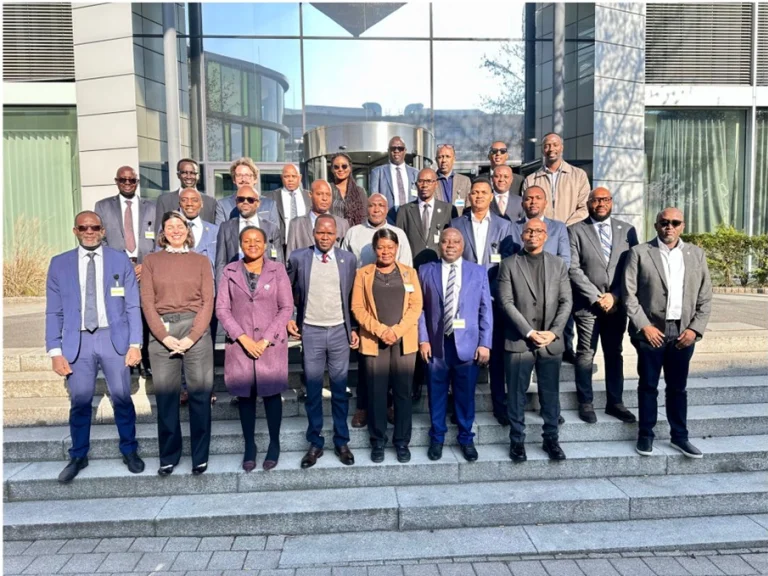
The Forum attracted senior policymakers, regulators, parliamentarians, central banks, private sector leaders, civil society and development partners to advance implementation of the region’s digital transformation agenda under the theme “From Strategy to Implementation: Building the Single Digital Market.”
The Forum comes at a critical time as the EAC advances implementation of key regional digital frameworks, including the EAC Digital Transformation Strategy, the Cross-Border Payment System Master Plan and the E-Commerce Strategy.
Together, these frameworks provide a roadmap for developing a secure, inclusive and interoperable digital ecosystem that supports the EAC Customs Union, Common Market and the African Continental Free Trade Area (AfCFTA).
Despite significant progress, barriers remain. Digital systems are not yet fully interoperable, cross-border payments remain costly, e-government platforms often operate in isolation, and innovative private sector solutions face uneven regulatory environments.
The Forum therefore serves as a working platform to address these challenges, align implementation priorities and unlock the potential of a Single Digital Market serving more than 330 million citizens across the EAC’s eight Partner States.
The Forum commenced the EU–EAC Digital Economy, E-Commerce, E-Payments and Public E-Services (EU–EAC DEEP) Programme. DEEP, funded by the European Union and Team Europe partners Germany, France and Estonia and implemented by GIZ, ESTDEV and Expertise France, supports implementation of the EAC digital policy agreements with a strong focus on e-commerce, e-payments, e-governance and cybersecurity.
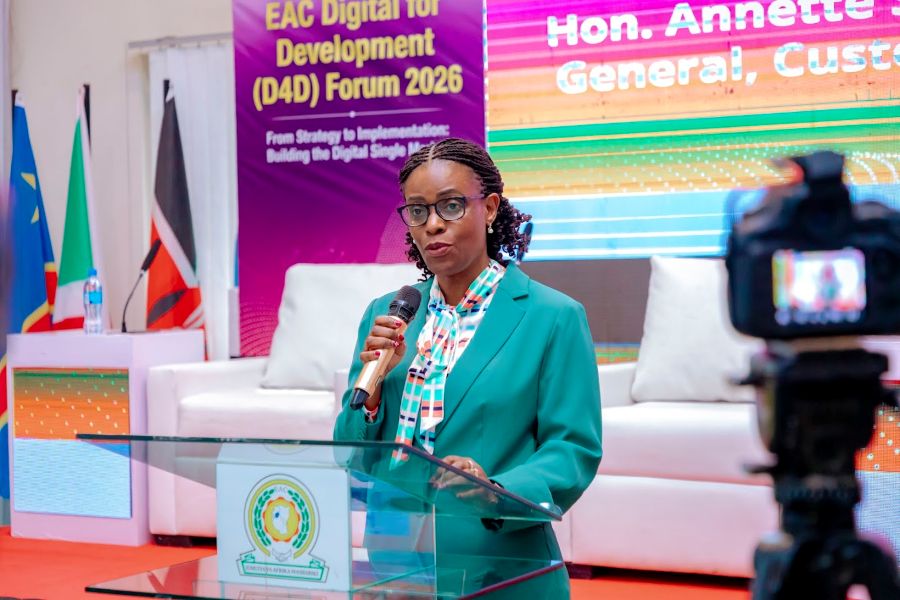
Speaking during the opening session, the EAC Deputy Secretary General responsible for Customs, Trade and Monetary Affairs, Ms. Annette Ssemuwemba, reflected on the journey from the first Digital for Development Forum in 2023 through the co-creation process in 2024 that shaped the DEEP Programme.
“Digital transformation is no longer an option; it is a necessity for accelerating regional integration and expanding trade opportunities. Our focus now is implementation and ensuring that citizens and businesses experience the benefits of a connected digital market,” said Ms. Ssemuwemba.
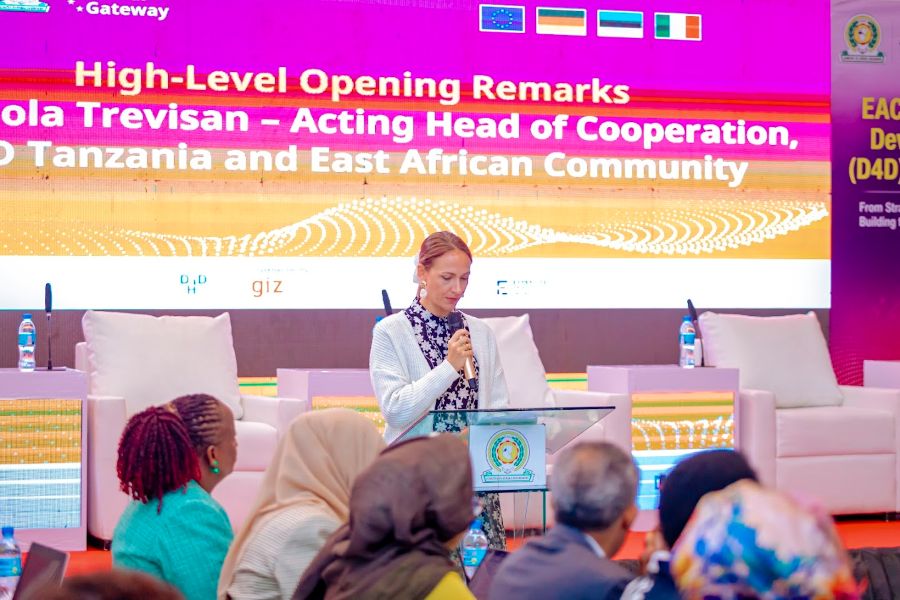
On her part, Ms. Paola Trevisan, Acting Head of Cooperation, European Union Delegation to Tanzania and the EAC, reaffirmed the EU’s commitment to a long-term, mutually beneficial digital partnership with the EAC, anchored in the EU’s Global Gateway strategy and the EU Tech Offer, which brings European expertise, standards and investment to support partner regions.
In line with the Programme’s Digital Public Infrastructure Acceleration Mechanism and the EU’s Global Gateway investment approach, the Forum is also serving as a platform for identifying and structuring a pipeline of bankable regional digital projects.
These projects span critical areas such as interoperable payment systems, regional e-government platforms, cross-border digital public services and secure data-sharing infrastructure.
Participants are working to align priority projects with suitable financing instruments from Global Gateway, European and African development finance institutions, commercial banks and private investors, with the aim of moving from pilot initiatives to scalable and investment-ready solutions.
Further, the Forum a platform for public-private collaboration, connecting policymakers and regulators with fintechs, e-commerce platforms and other technology providers capable of deploying proven solutions at regional scale.
The Forum is expected to contribute to the development of interoperable payment systems, digital public services and e-commerce ecosystems that will make it easier for businesses to trade across borders, reduce transaction costs, improve access to services and create new opportunities for innovation, entrepreneurship and job creation, particularly for women and youth.
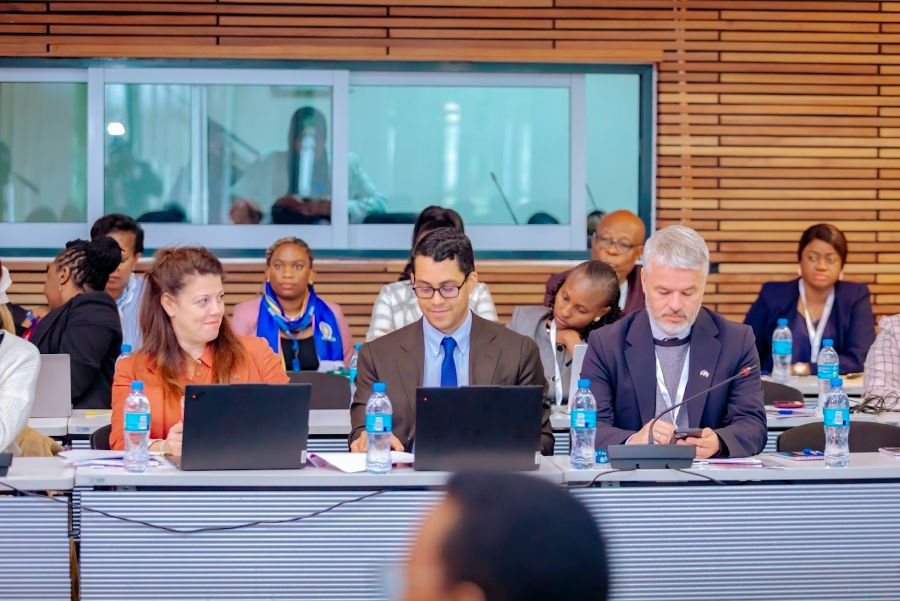
By the close of the Forum, participants are expected to agree on a set of practical recommendations, partnership commitments and investment-ready initiatives that will accelerate implementation of the EAC Digital Transformation Agenda and bring East Africa closer to a secure, inclusive and interoperable Single Digital Market.
The EU–EAC Digital Economy, E-Commerce, E-Payments and Public E-Services (DEEP) Programme is a regional initiative supporting the East African Community (EAC) in advancing integrated, inclusive and competitive digital markets.
Co-financed by the European Union, Germany, Estonia and France, the programme focuses on digital transformation, e-commerce, digital payments, cybersecurity and e-government services to accelerate regional integration, digital trade and economic growth across East Africa.
About the East African Community
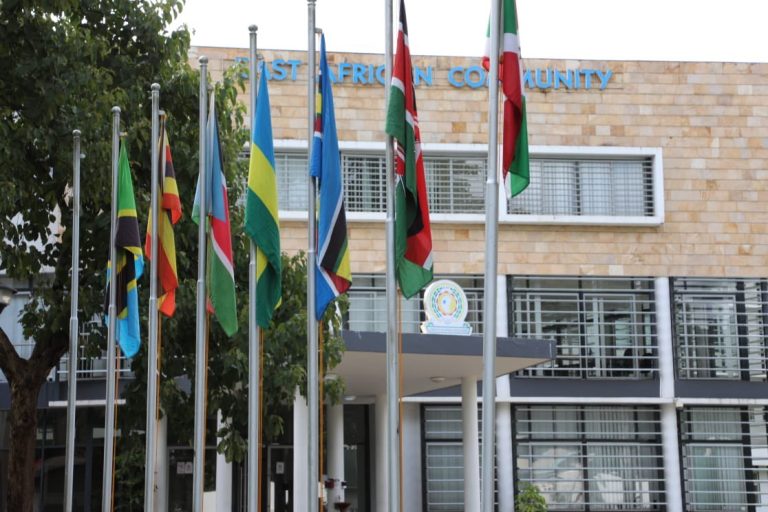
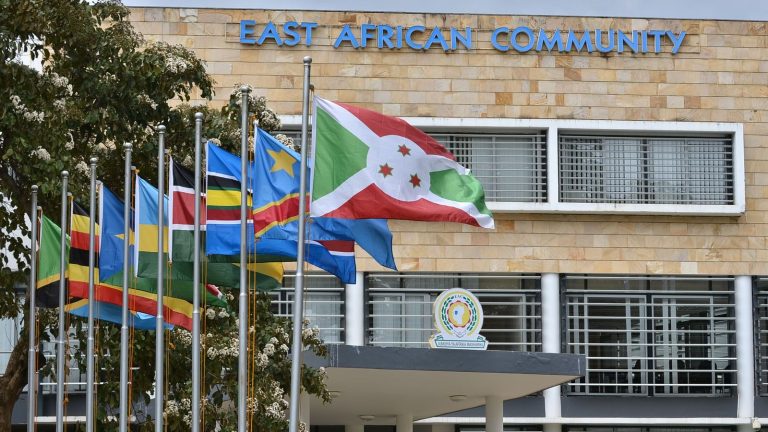
The East African Community (EAC) is a regional intergovernmental organization comprising the Democratic Republic of Congo, the Federal Republic of Somalia, the Republic of Burundi, the Republic of Kenya, the Republic of Rwanda, the Republic of South Sudan, the Republic of Uganda and the United Republic of Tanzania.
The EAC aims to expand and deepen economic, political, social, and cultural integration to improve the quality of life of the people of East Africa through increased competitiveness, value-added production, trade, and investment.
The EAC has intensified efforts to build a SingleDigitalMarket by convening the 2026 Digital for Development (D4D) Forum under the theme: “From Strategy to Implementation: Building the Digital Single Market.”