






Recognizing technology as a major economic driver, TARI works to develop key innovations in seeds, value addition, farming practices, and artificial intelligence (AI), and to market these both domestically and internationally.
TANZANIA is making significant investments in key technologies to enhance the performance of its agricultural sector.
By 2025, the Tanzania Agriculture Research Institute (TARI) had invented and developed a total of 443 important agricultural technologies, with at least 312 of these focused on seeds.
In an exclusive interview, the Director General of the state-owned institute, Dr. Thomas Bwana, stated that further impactful research and innovation are underway.
“We aim to develop more useful agro-technologies, both for seeds and agronomic practices,” he said.

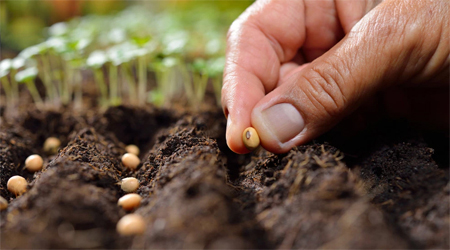
According to Dr. Bwana, the ongoing high-tech seed research covers both improved varieties and local landraces of key food and cash crops.
“The global agricultural landscape is seeing rapid innovation and technological adoption, a trend that is encouraging Tanzania to also digitalize its sector for better field results,” he noted.
Having led the institute for two years, Dr. Bwana, one of the country’s foremost agricultural experts, expressed his commitment to transforming TARI into a high-tech international agricultural hub within Africa.
“We are working to create useful agricultural technologies with the goal of eventually marketing them to other countries,” he affirmed.
To realize this vision, Dr. Bwana detailed that TARI is focusing on enhancing staff capacity, upgrading laboratory infrastructure, and establishing multiple irrigation schemes.
“Reliable irrigation will help us shorten seed breeding cycles,” he added.
Recognizing technology as a major economic driver, he outlined the institute’s goal to develop key innovations in seeds, value addition, farming practices, and artificial intelligence (AI), and to market these both domestically and internationally.
“The main objective is to produce the best technologies that address the diverse challenges farmers face, while also helping them achieve profitable returns,” Dr. Bwana said.

He thanked the government for its continued investment in TARI, including the establishment of a national agricultural digital lab in Dodoma and support for a bioscience center under construction in Dakawa, Morogoro.
“By 2030, we are determined to see TARI recognized among leading agricultural institutes that play a vital role in boosting production and productivity,” Dr. Bwana stated.
Agriculture remains a cornerstone of Tanzania’s economy in 2026, driving growth alongside mining and construction. The sector’s contribution to GDP is projected to reach at least TZS 12.9 trillion this year.
Employing about 65 percent of the workforce and accounting for 26 percent of GDP, agriculture continues to be a major economic pillar.
Key growth drivers for 2026 include increased exports of cash crops—such as coffee, tea, tobacco, and cashews—and expansion in agro-processing, supported by the Agricultural Sector Development Programme (ASDP II).
Tanzania’s agricultural exports are rising sharply, with coffee up 66.3 percent tobacco 32 percent and avocado 74 percent as of early 2026.
The country is also seeing positive trends in value addition, including a significant 67 percent increase in cashew processing, underscoring a move toward agro-processing and industrialization.