






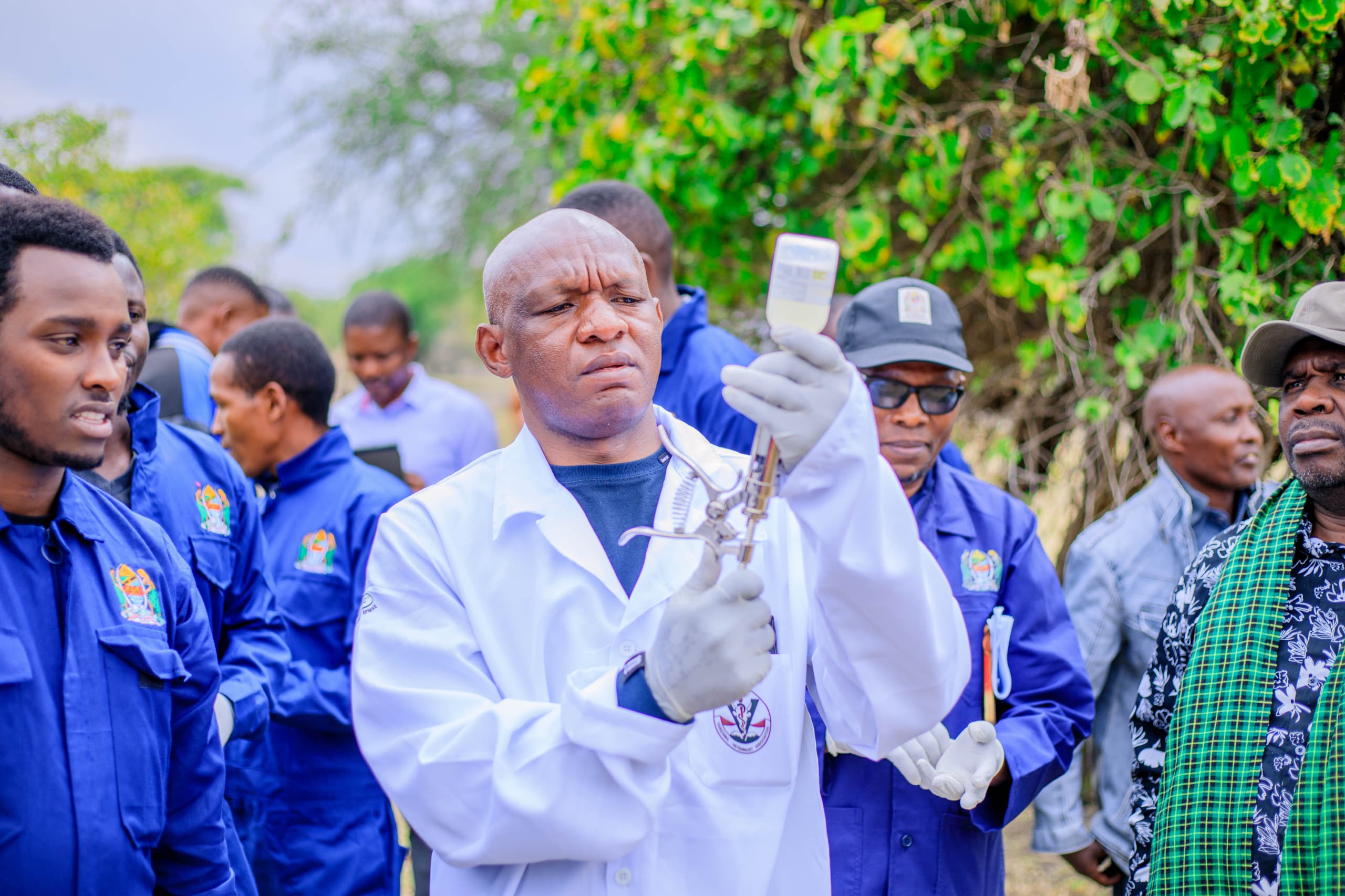
Prof Erick Komba, the Director General of TALIRI
The Vital Exercise Which Is Implemented At A Cost Of Around 216bn/- Seek To Counter A Seismic Wave Of Disease Towards The Livestock Population In Order To Allow The County To Benefit From Expanded Meat Markets At International Level.
MANYARA. A TOTAL of 400 cattle in Manyara have so far received useful vaccinations during the commencement of a nationalwide livestock vaccination and identification program in the region.
Through the robust five- year strategy (2024-2029) the government through the ministry of livestock targets to vaccinate at least 70 percent of livestock population across the country.
Among others, the vital exercise which is implemented at a cost of around 216bn/-seek to counter a seismic wave of disease towards the livestock population in order to allow the county to benefiting from expanded meat markets at international level.
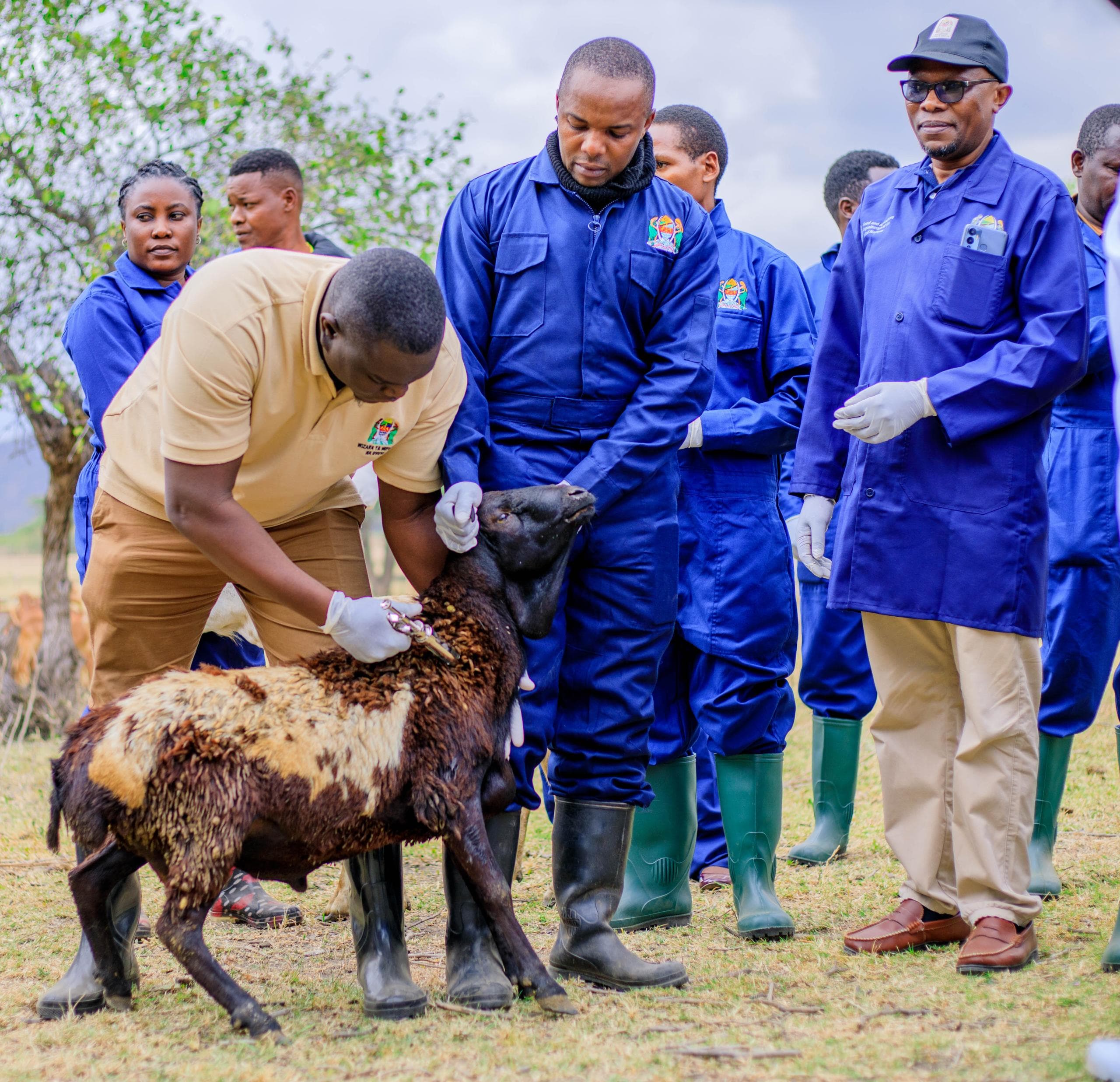
A veterinarian from the Northern Zonal Veterinary Center (ZVC-Arusha) Dr. Robert Buluba vaccinates a sheet during launching of the national livestock vaccination strategy in Manyara region.
Speaking Thursday in Babati district on behalf of Manyara Regional Commissioner (RC) during the launch of the exercise in the region, the Administrative Secretary of Babati district, Mr Thobias Abwaro expressed that the exercise is projected to bring about major transfomation among the cattle farmers in the area.
“We’re very grateful to President Samia Suluhu Hassan for supporting implementation of this helpful strategy which will now enable the livestock farmers in Manyara region, and the country in larger perspective to overcome the long standing plight of diseases towards their livestock,” he said.
He added, livestock vaccination has been taking place in low ebb across the country, at the levels of individual farmers and local government authorities, the interventions which couldn’t reduce the diseases to zero.
“In order to eradicate a spate of livestock diseases in the country, the join efforts was highly needed and thus, we remain optimistic that the ongoing strategy will play key role to eradicate livestock diseases to the tune of at least 70 percent,” he observed.
On his side, the Director General (DG) of the Tanzania Livestock Research Institution (TALIRI), Prof. Erick Komba, expressed that the livestock population in Tanzania is subjected to diverse dangerous diseases, prompting to deaths and poor quality in livestock products.
“It is for this reason Tanzania has been failing to comply with the standards of meat, and other livestock produce as set in different countries overseas,” he noted.
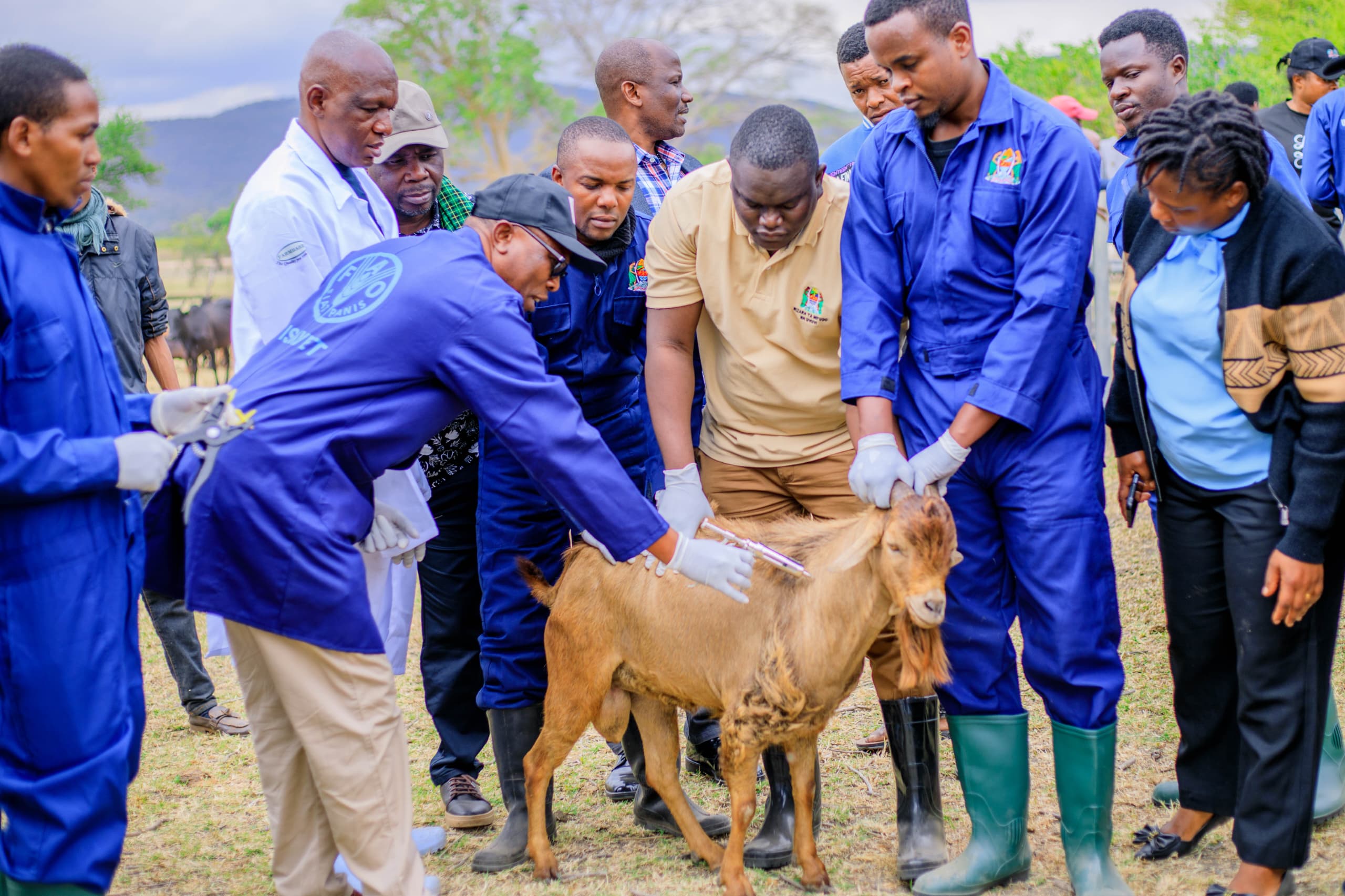
The Registrar of the Veterinary Council of Tanzania (VCT), Dr Obed Nyasebwa, rolls out a vaccination to a goat during uring launching of the national livestock vaccination strategy in Manyara region.
He hailed President Samia Suluhu Hassan for allowing, and financing execution of the strategy to help improve performance of the sector.
Prof Komba called on pastoralists to come out in large numbers in order to have their livestock vaccinated and identified .
The strategy, which was officially inaugurated by President Samia Suluhu Hassan on June 16st, 2025 at the Nyakabindi grounds, Bariadi district in Simiyu region, entails vaccination of a total of 19,097,223 cows across the country against the contagious bovine pleuropneumonia (CBPP).
Moreover, at least 20, 900,000 goats and sheeps will be vaccinated against the peste des petits ruminants (PPR), an acute or subacute viral disease of goats and sheep characterized by fever.
Together with that, the poultry sector will also be impacted, whereby a total of 40,000,000 local chickens will receive a special vaccination against the virulent Newcastle Disease (ND).
Though this strategy, the government is targeting to expand meat exportation level to 30,000 tons by 2029, from the currently 14,000 tons, the development which will enable the sector to fetch a total of USD 152,287,305.2, being from the currently USD 51, 894, 622,” she expressed.
During the 2024-25 fiscal year the government has set aside at least 28.1bn/- as a preliminary budget to support implementation of the first phase of the national vaccination strategy.