







By Senior Reporter VALENTINE OFORO
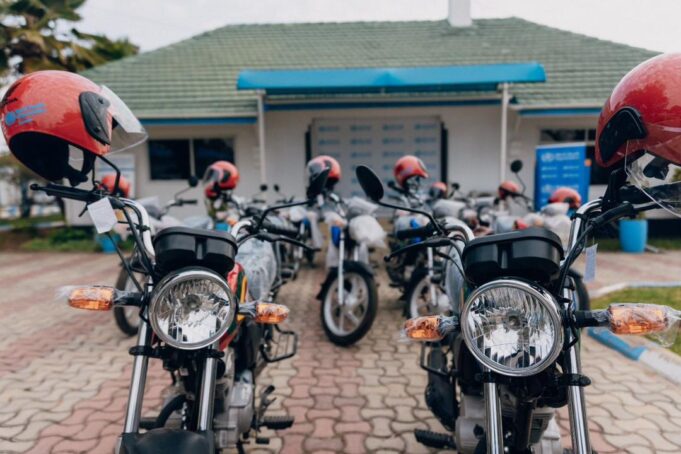
THE World Health Organisation (WHO), through funding support from the Irish Fund, has donated a total of 12 motorcycles to the government of Tanzania.
The donation is intending to boost the effectiveness of district surveillance officers in monitoring and mentoring health facilities, significantly improving adherence to integrated disease surveillance and response strategies.
Speaking in Dodoma Capital City during a brief event for the official handing over of the facilities, Dr. Charles Sagoe-Moses, the WHO country representative expressed gratitude to the government of Tanzania for its proactive measures to help strengthening the health systems.
“These motorcycles will be instrumental in supporting the supervision and monitoring of Event -Based Surveillance (EBS)” he said.
He added:”We extend our sincere thanks to Irish government and the Irish Embassy for their financial support and commitment to the ‘Health for All’ agenda,”
Dr Moses stated that efficient disease surveillance is essential for early detection and control of public health threats.
However, he observed that inadequate transportation infrastructure often hampers effective supervision and monitoring at the district and health service levels.
“The new motorcycles will address these challenges, enabling more regular and efficient supervision, mentorship, and adherence to Event-Based Surveillance (EBS) protocols,” he added.
Giving further details, he added that Tanzania has faced numerous health emergencies, including cholera and Marburg virus outbreaks, highlighting the need for improved resilience at the sub- national levels.
“This donation is part of the broader project, ‘Strengthening Health Systems Resilience for Enhanced Health Emergency Response at
Sub- national Level,” funded by the Irish government ,” he added.
He said the project aims to bolster healthcare capacity to effectively respond to emergencies.
For his part, the Deputy Permanent Secretary in the President Office, (Regional Administration and Local Government) Dr Charles Wilson Mahera acknowledged the significant challenges related to transportation infrastructure that districts face, which affect surveillance operations.
“The support from WHO is invaluable for our emergency response efforts, and it will greatly enhance our ability to monitor and manage health crisis, aligning with our health for all goals,” he said.
In addition to the motorcycles, the Irish -funded project supports several other key initiatives, including the development of the National Action Plan for Health Security (2024-2028), maintenance of influenza sentinel sites, and strengthening emergency response capacities.
The Head of Development Cooperation at the Irish Embassy, Margaret Gaynor, said during the event that the timely initiative underscores the joint commitment to enhancing a sustainable response to health emergencies.