










Summary
* This conference will function as a strategic follow-up to UNESCO’s designation of July 7 as World Kiswahili Day, a milestone that has significantly elevated the language’s international profile.
PARIS: THE government of Tanzania has officially confirmed that it will host the International Kiswahili Conference in Paris, France, from April 27 to 30, 2026.
The event, to be held under the auspices of UNESCO, will convene linguists, cultural authorities, and international stakeholders to deliberate on the future trajectory of Kiswahili and its expanding role in facilitating global discourse.
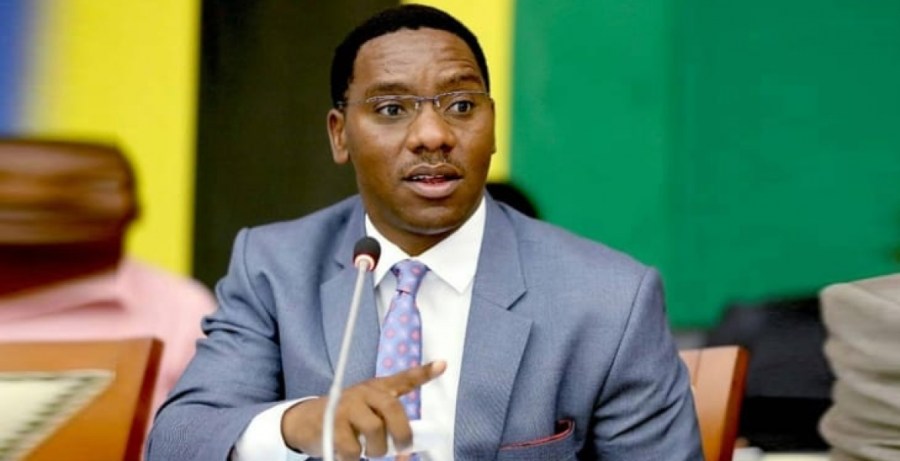
The announcement was delivered by the Minister for Information, Culture, Arts and Sports, Mr. Paul Makonda, during his keynote address at the 26th International Mother Language Day commemorations at UNESCO Headquarters in Paris.
Representing the Tanzanian government, Minister Makonda emphasized the profound significance of Kiswahili as a lingua franca not only within Tanzania but throughout East and Central Africa, where it serves as a unifying medium for over 120 distinct ethnic groups.
“We are honoured to extend an invitation to global leaders and linguistic scholars to join us in Paris for this seminal gathering. The conference will establish a critical forum to underscore the importance of Kiswahili in the realms of diplomacy, education, and sustainable development,” he said.
He further conveyed the greetings of President Samia Suluhu Hassan, who lauded UNESCO for its sustained commitment to the promotion of mother languages worldwide.
This conference will function as a strategic follow-up to UNESCO’s designation of July 7 as World Kiswahili Day, a milestone that has significantly elevated the language’s international profile.
Kiswahili holds the distinction of being the first African language to receive official recognition from the United Nations, thereby consolidating its position in global dialogue and cross-cultural exchange.
In his remarks, Mr. Makonda observed that Kiswahili is spoken by an estimated 500 million individuals globally, with its academic footprint rapidly expanding across institutions in Africa, Europe, Asia, and the Americas.
He also accentuated the language’s indispensable role in fortifying social cohesion within Tanzania, noting its historical function in harmonizing a nation of considerable ethnic diversity.
“Tanzania’s endeavour to advance Kiswahili transcends mere cultural preservation; it stands as a testament to the transformative power of language in cultivating peace and progress. This conference will investigate avenues through which Kiswahili can further enrich global dialogue, education, and unity,” Minister Makonda expressed.
The conference agenda will feature in-depth deliberations on mother-tongue education, multilingualism in the digital era, and the potential of Kiswahili to act as a conduit between cultures.
A focal point will be the challenges confronting global education systems, where approximately 40 per cent of students worldwide are not instructed in a language they fully comprehend.
Makonda noted that education in one’s mother tongue correlates with enhanced cognitive abilities, greater self-assurance, and a more robust sense of cultural identity.
Beyond the conference proceedings, the Minister reaffirmed Tanzania’s dedication to strengthening multilingualism through initiatives such as the National Kiswahili Corpus and the Atlas of Tanzania’s Mother Languages.
These projects are designed to propel the use of Kiswahili in research, pedagogy, and digital domains, ensuring its continued relevance in an evolving global landscape.
The conference will additionally prioritize the engagement of youth in the promotion of Kiswahili, with particular attention to digital innovation. It will showcase how young creators are leveraging the language across diverse mediums, including music, cinema, literature, and online platforms.
Status of kiswahili language in Africa
Kiswahili is the most widely spoken indigenous language in Africa, with over 200 million speakers, serving as a vital lingua franca across East, Central, and Southern Africa.
It holds official status in the African Union (AU), Southern African Development Community (SADC), and East African Community (EAC). It is a national or official language in Tanzania, Kenya, Uganda, Rwanda, and the DRC, with growing adoption in education and media.
Key Aspects of the Status of Kiswahili:
Lingua Franca: It acts as a primary language for trade, diplomacy, and communication in the African Great Lakes region and beyond.
Official Recognition: Recognized by the African Union and UNESCO (which designated July 7 as World Kiswahili Language Day) as a key language for fostering African unity.
Growth & Education: It is increasingly used in parliament (e.g., Kenya), media, and taught in schools, with ongoing initiatives to promote it as a pan-African language.
Demographic Reach: While native to about 5 million people on the coast, it has over 200 million users as a second language, making it one of the top 10 most spoken languages globally.
Cultural & Digital Impact: It is used extensively in music (Bongo Flava), literature, and the digital space, boosting its role in youth culture and information access.
As a non-colonial, Bantu-based language, it is increasingly viewed as a unifying, indigenous, and Pan-African language
About The Author
