









DODOMA: TANZANIA has been ranked among the highest-achieving countries under the World Bank’s agricultural initiatives, solidifying its position to continue receiving support from the global financial institution.
This positive assessment was shared by the World Bank Manager for Food and Agriculture, Ms. Frauke Jongbluth, during a meeting with Tanzania’s Permanent Secretary (PS) in the Ministry of Agriculture, Mr. Gerald Mweli.
The discussion took place at the Ministry’s headquarters in Mtumba, Dodoma.
Their talks covered several key agricultural issues, with particular emphasis on improving Tanzanian farmers’ access to affordable credit and training.
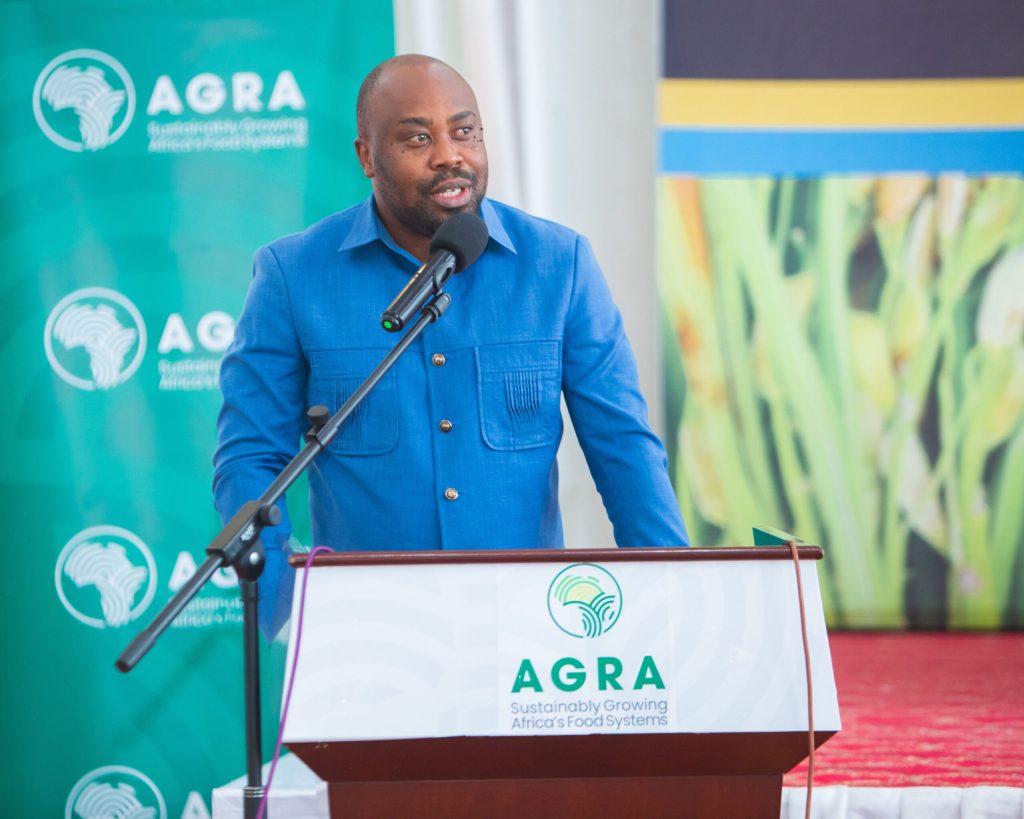
Mr. Gerald Mweli
Mr. Mweli noted that the local farmers have historically faced significant barriers to loans, largely due to their classification within the informal sector.
“The ministry is actively working to improve lending conditions, connect farmers with buyers, and ensure access to inputs, extension services, and modern agricultural technologies,” he stated.
He further expressed the ministry’s commitment to strengthening agriculture by linking producers to markets, supplying fertilizers, providing extension services and technology, and offering other forms of support to enhance productivity.
Ms. Jongbluth commended Tanzania for its effective implementation of agricultural policies and proficient management of development projects.
She confirmed that due to its high performance in World Bank programs, Tanzania will continue to receive the institution’s backing to further develop the sector.
This partnership supports broader continental goals under the African Union’s Comprehensive Africa Agriculture Development Programme (CAADP).
The framework encourages African nations to allocate at least 10 percent of their national budgets to agriculture, targeting 6 percent annual growth in the sector.
The success of these efforts will hinge on several factors, including the effectiveness of farmer training, the adaptability of financial institutions in lending, and the government’s ability to foster a policy environment conducive to agricultural investment and innovation.
World Bank Support in Action
The World Bank’s support for Tanzania’s agriculture includes several major initiatives:
Tanzania Food Systems Resilience Program (TFSRP): A $300 million program aimed at increasing productivity for over 300,000 farmers and building climate resilience.
It focuses on climate-smart technologies, improved seeds, and enhanced agricultural services, ultimately benefiting 1.8 million farmers.
AGCOT Investment Project: Designed to connect smallholder farmers with agribusinesses to raise incomes and productivity, particularly within the Agricultural Growth Corridor of Tanzania (AGCOT).
Agricultural Sector Development Project (ASDP II): Provides funding to strengthen agricultural research, extension services, and rural infrastructure.
Climate Resilience & Natural Resource Management: Includes a $100 million IDA credit for the Scaling-Up Locally Led Climate Action Program (SCALE), which aims to bolster rural livelihoods and resilience.
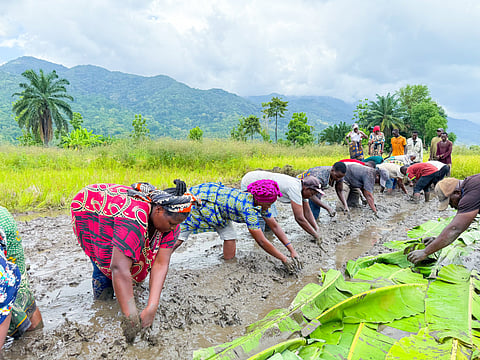
Irrigation Support: Investments targeted at rehabilitating irrigation schemes to boost rice production.
About The Author
