





The collaboration was formalized at the Mining Indaba Conference in Cape Town, South Africa, with the signing of a Memorandum of Understanding (MoU) between the Geological Survey of Finland (GTK) and the Geological Survey of Tanzania (GST).
CAPE TOWN: Tanzania and Finland have strengthened their bilateral cooperation in mining through a new framework designed to boost Tanzania’s technical capacity and enhance the quality of its geoscientific data.
The partnership aims to leverage Finnish expertise to promote sustainable mining practices and data-driven decision-making, thereby supporting Tanzania’s economic growth.
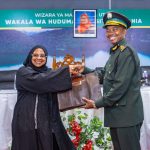
The collaboration was formalized at the Mining Indaba Conference in Cape Town, South Africa, with the signing of a Memorandum of Understanding (MoU) between the Geological Survey of Finland (GTK) and the Geological Survey of Tanzania (GST).
This agreement is a crucial step for Tanzania’s mining sector, as it establishes the foundation for a modern, competitive, and sustainable industry.
It is expected to make Tanzania more attractive to investors, improve the country’s ability to manage its resources, and maximize the economic and social benefits derived from its mineral wealth.
The MoU focuses on building the capacity of Tanzanian experts in analyzing, interpreting, and validating geoscientific information in accordance with international standards.
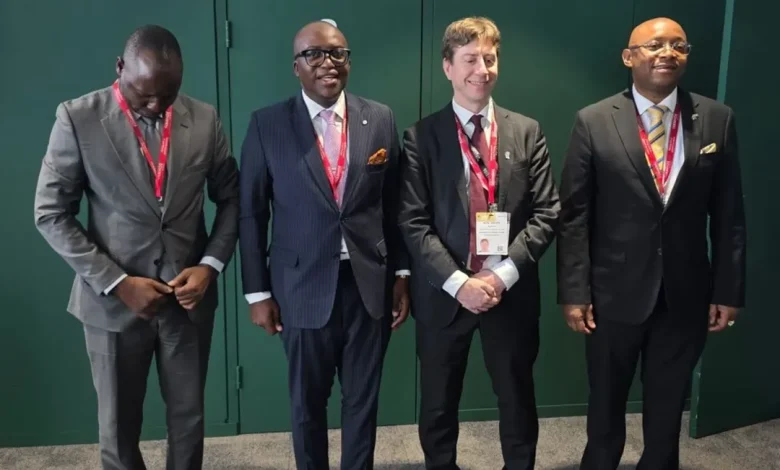
The signing followed bilateral discussions held recently between Tanzania’s Minister for Minerals, Mr. Anthony Mavunde, and Finland’s Minister for Foreign Trade and Development, Sakari Puisto, on the sidelines of the conference.
Under the agreement, GTK and GST will collaborate in several key areas. This includes strengthening the technical capacity of GST professionals to operate laboratories, particularly in conducting sample testing that meets international standards.
The two institutions will also cooperate on geoscientific research, with an emphasis on high-resolution geophysical surveys aimed at improving the quality and availability of mineral data in Tanzania.
The partnership is anticipated to enhance Tanzania’s ability to generate reliable geoscientific information, support informed decision-making, attract quality investment in the mining sector, and contribute to the sustainable development of its mineral resources.
Engagements with the United States and Rio Tinto
In a separate engagement, the Tanzanian delegation held talks with representatives from the United States, led by Thomas Hardy, Deputy Director and Head of Operations at the U.S. Trade and Development Agency (USTDA).
The discussions explored potential areas of cooperation, including research and value addition for critical and strategic minerals.
The talks highlighted the importance of advanced geoscientific surveys, such as airborne geophysical studies, and reviewed progress on gemstone research projects being implemented in collaboration with GST under exploration licenses held by the State Mining Corporation (STAMICO).
Both parties emphasized the need to promote local mineral value addition in line with Tanzania’s Mining Act. Minister Mavunde underscored the importance of in-depth geological surveys and encouraged the United States to prioritize this area to support the establishment of additional mining projects in Tanzania.
He also stressed the need for sustained collaboration with GST on advanced surveys to generate comprehensive data capable of attracting large-scale mining investments.
In another key meeting, Minister Mavunde met with representatives from the global mining company Rio Tinto, which has over 150 years of experience and operates in approximately 35 countries worldwide. Rio Tinto specializes in the exploration and value chain development of copper, bauxite (aluminum), and graphite.
During the meeting, Tanzania’s modern infrastructure—including the Standard Gauge Railway (SGR), the Tanzania–Zambia Railway Authority (TAZARA), its Mineral Policy, and a favorable business environment—were cited as key factors attracting Rio Tinto’s interest in investing in Tanzania’s mining sector.
Minister Mavunde advised the company to expedite its exploration activities and engage in discussions with STAMICO, which holds various exploration licenses for strategic minerals.
He noted that, in accordance with Tanzanian law, STAMICO is permitted to enter into joint ventures with both local and foreign investors. This provides Rio Tinto with an opportunity to invest in mineral exploration and potentially establish a strategic mine, including the construction of a mineral value-addition plant within the country.
About The Author