






Climbing Kilimanjaro offers a once-in-a-lifetime journey through breathtaking landscapes—from lush forests to glacial peaks—and remains one of the world’s most iconic adventures.
KILIMANJARO. IN an extraordinary feat of endurance and dedication, UK- based conservation activist, Chris Green, known globally as ‘Rhino Boy‘ has successfully climbed Mount Kilimanjaro while wearing a full rhino costume.
The six-day trek, which began on January 16, 2026, aimed to raise funds and global awareness for the critically endangered rhinoceros.
Green, an ambassador for Save the Rhino International, reached the summit of Africa’s highest peak, often called the “Roof of Africa” and completed his descent earlier this week.
At a press conference on January 21, he described the experience as “physically exhausting but emotionally uplifting.”
“Physically, I feel like the weariest rhino there could be,” Green said. “But emotionally, I am filled with happiness and hope.”
That hope, he explained, was fueled by the overwhelming support he received from Tanzanian National Parks officials, guides, porters, rangers, and fellow climbers.
“Everyone came together to help this rhino reach the summit. It shows what we can achieve when we unite for conservation,” Green stated.
Climbing Kilimanjaro is a formidable challenge under normal circumstances. Attempting it in a bulky costume tested Green’s physical and mental limits daily.
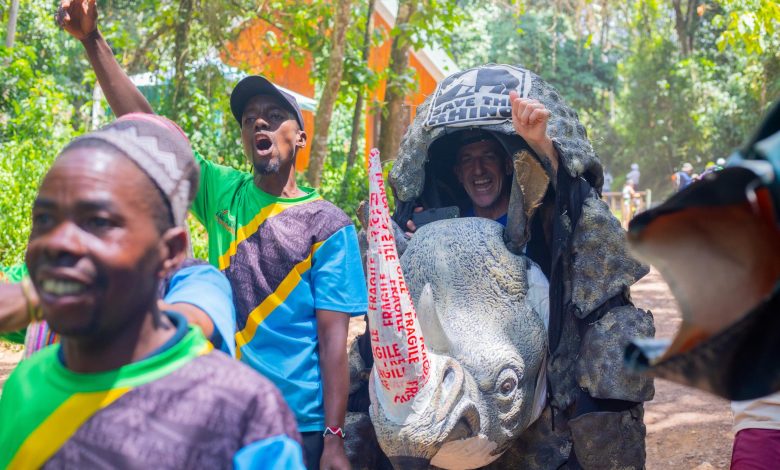
“There were moments when it felt almost impossible,” he admitted. “But nothing is impossible when you put your heart into a cause—especially surrounded by good people.”
That cause is the survival of rhinos. Three of the world’s five rhino species are classified as critically endangered, including Africa’s black rhino, which continues to suffer from poaching and habitat loss.
“Rhinos symbolize peace, gentleness, and magnificence,” Green said. “It breaks my heart that they are so threatened. I did this to sound the alarm—so that together, we can turn the tide.”
According to the International Rhino Foundation, roughly 27,000 rhinos remain across all five species. While poaching has declined from its peak a decade ago, the illegal wildlife trade remains rampant. In South Africa alone, at least one rhino is killed by poachers each day—420 were lost in 2024, and 195 more in the first half of 2025.
Rhino horn, sought for ornamental dagger handles in the Middle East and for use in traditional medicine in Asia, can fetch between US$60,000 and US$100,000 per kilogram on the black market. A single horn can be worth over US$250,000.
South Africa, home to nearly 80 percent of the world’s remaining rhinos, has borne the brunt of the crisis. Conservation groups estimate that more than 9,400 African rhinos were poached between 2010 and 2020.
Green praised Tanzania and its conservation authorities for their unwavering support, giving Tanzanian National Parks a “10 out of 10” rating.
“They could have found a hundred reasons to say no, but instead they found every reason to say yes,” he said.
In closing, Green called for global solidarity in wildlife protection: “With friends like these, anything is possible. Let’s save the rhino, save species, and ultimately, save each other.”
ABOUT MOUNT KILIMANJARO
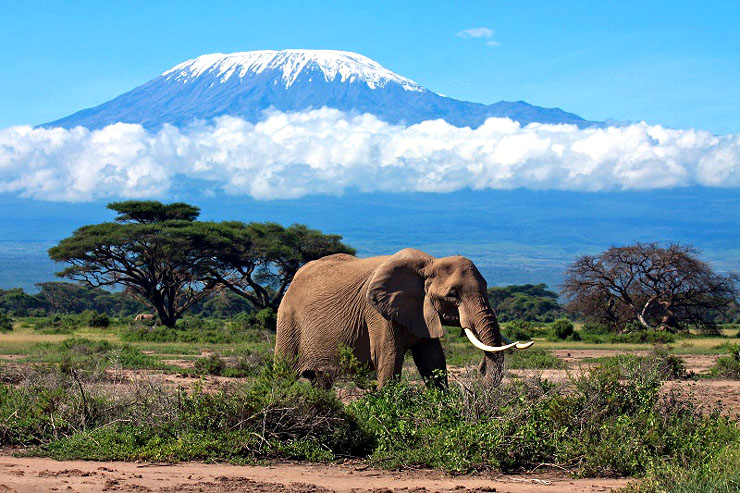
Mount Kilimanjaro is Africa’s highest peak (5,895 m) and the world’s tallest free-standing volcano. It consists of three volcanic cones: Kibo (dormant, with a permanent snow cap), Mawenzi (dormant), and Shira (extinct).
The name likely derives from the Swahili word ‘Kilima’ (mountain) and the Chagga term ‘Njaro’ (whiteness), together meaning “White Mountain.”
KEY FACTS
Size: 1,712 km²
Status: Declared a National Park in 1973, a UNESCO World Heritage Site in 1987, and a Natural Wonder of Africa in 2013.
Climate: Two rainy seasons (March–May) and a dry season (June–September). Rainfall ranges from 828 mm in alpine deserts to 2,500 mm in montane forests.
Access: Accessible by road or via Kilimanjaro International Airport. The park has multiple gates, including Marangu (main headquarters), Rongai, Machame, Lemosho, and others.
Park Attractions:
Three Peaks: Kibo (summit), Mawenzi (rugged, glaciated), and Shira (plateau with scenic wildlife views).
Vegetation Zones: Five distinct eco-climatic zones, ranging from montane forest to arctic summit conditions.
Wildlife: Home to 140 mammal species (including elephants, buffaloes, and primates) and 179 bird species.
Cultural and Natural Sites: Lauwo Waterfall, Maundi Crater (panoramic views), and the sacred Kifinika Cultural Site.
Activities:
Mountain climbing: (5–8 days to summit via six different routes)
Nature walking safaris, paragliding, mountain cycling, picnicking, filming, and crater camping.
Climbing Kilimanjaro offers a once-in-a-lifetime journey through breathtaking landscapes—from lush forests to glacial peaks—and remains one of the world’s most iconic adventures.
About The Author