






Summary
–Analysing the links with earnings, the World Bank says children born today in low- and middle-income countries could earn 51 percent more through their lifetime if their country’s human capital matched that of the best-performing nations at similar income levels.
WORLD BANK: Nigeria’s long-standing challenges in education and healthcare are now exacting a measurable economic toll.
In its latest assessment, the World Bank says poor learning outcomes and inadequate health services are diminishing the future earning potential of children.
According to a World Bank report, deteriorating health, education and training in many developing countries, such as Nigeria, is eroding the future earnings of children born in the contemporary era.
Nigeria’s education, health, and human capital development systems are facing a “poly-crisis” syndrome, which is seen as depressing the future earning potential of young people.
The country is characterised by high, yet underutilised, population growth, with systemic failures leading to brain drain, crumbling infrastructure, and poor learning outcomes.
According to a 2023 report by the Nigeria Union of Teachers (NUT), attrition rates among public school teachers in some states have become dangerously high.
Niger and Bayelsa states recorded teacher exits of 47.5 percent and 14.2 percent, respectively, over recent multi-year periods.
Another joint study in Rivers and Anambra states attributes the exodus primarily to burnout and poor working conditions, not a lack of dedication.
Nubi Achebo, director of academic planning at Nigerian University of Technology and Management (NUTM), said that human capital is crucial for Nigeria’s economic growth, especially with its ambitious goal of becoming a $1 trillion economy by 2030.
“The country’s education sector is plagued by inadequate funding, poor infrastructure, and teacher shortages. For instance, Nigeria’s literacy rate for adults is approximately 62 percent, highlighting the gap in achieving universal education.
“The health sector also faces similar challenges, with inadequate funding, insufficient healthcare facilities, and a brain drain of medical professionals,” he said.
To address these issues, Achebo said the government should increase funding, improve infrastructure, enhance teacher training, and promote public-private partnerships.
“Allocate more resources to health and education, meeting UNESCO’s recommended 15-20 percent of total education expenditure and WHO’s five percent for health.
“Develop and maintain schools and healthcare facilities, provide quality training for educators and healthcare professionals; and collaborate with private sector entities to support human capital development,” he said.
Achebo emphasised that with the World Bank’s $1.08 billion in financing to support Nigeria’s education, nutrition, and economic resilience, there is a positive step towards addressing these challenges.
According to the World Bank, children born today could earn 51 percent more over their lifetime if their country’s human capital improved
Hence, the World Bank urges policymakers to focus on improving outcomes in three settings: homes, neighbourhoods and workplaces.
The report, Building Human Capital Where it Matters, finds that in 86 of 129 low- and middle-income countries, health, education, or workplace learning declined between 2010 and 2025.
Analysing the links with earnings, the World Bank says children born today in low- and middle-income countries could earn 51 percent more through their lifetime if their country’s human capital matched that of the best-performing nations at similar income levels.
Mamta Murthi, vice-president for people at World Bank, said: “The prosperity of low- and middle-income countries depends on their ability to build and protect human capital.
“Right now, we see that many countries are struggling to improve nutrition, learning and skills of their current and future workforce, which raises concerns about labour productivity and the types of jobs their economies can sustain in the future.”
As many as 70 per cent of workers in low- and middle-income countries are in small-scale agriculture, low-quality self-employment, or micro-firms.
Evidence of this troubling deterioration includes the fact that in several sub-Saharan African countries, such as Nigeria, the average adult is shorter today than 25 years ago, pointing to a deterioration in underlying health.
Meanwhile, children across low- and middle-income countries are achieving lower learning outcomes than 15 years ago, the World Bank says, with the worst decline in sub-Saharan Africa.
The 140-page analysis draws on recent research to tease out a range of factors that affected human capital, from stunting in childhood due to malnutrition to the presence of criminal gangs in local neighbourhoods.
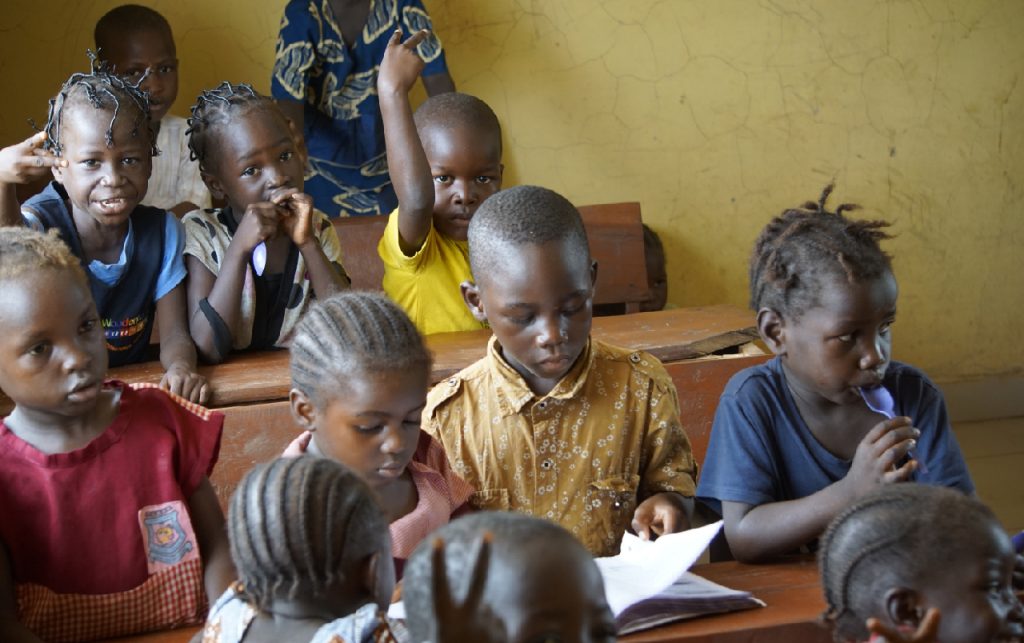
According to a UNICEF report, in Nigeria, even though primary education is officially free and compulsory, about 10.5 million children aged 5-14 years are not in school.
“Only 61 percent of 6-11-year-olds regularly attend primary school, and only 35.6 percent of children aged 36-59 months receive early childhood education.”
Friday Erhabor, director of media and strategy at Marklenez Limited, advocates a tax system of funding education.
“The government should encourage a tax system for funding its projects. For instance, corporate organisations should liaise with institutions of choice and channel their tax fund into handling some of the projects of such institutions,” he said.
About The Author
