


The target is to purchase and store at least 92,000 tonnes of sugar as a buffer against unnecessary price increases, as well as catering for emergency cases.
By Senior Reporter VALENTINE OFORO
THE National Food Reserve Agency (NFRA) is expecting to start importing sugar from March this year whereby it has already install modern warehouses in Dar es Salaam and Mwanza cities for professional storaging of the sweatner.
Dr Andrew Komba, the NFRA chief executive officer (CEO) told this publication during an interview over the weekend that the Sugar Board of Tanzania (SBT) has directed the Agency to start importing sugar from March this year.
“Currently, the country’s sugar adequacy is stable, but the SBT has instructed us to prepare to start import it from March this year,” he said.

Dr Komba informed that the Agency has decided to install sugar storage towers in Dar es Salaam and Mwanza because the areas are highly populated, thus will likely affected more than others incase of sugar scarcity.
“We’re now working to prepare effective to ensure we stand ready and equipped to start importing the sugar as the board has said it will issue us importing permit by March this year,” he informed.
He added that the Agency will import the sweater under the supervising of the relevant board.
The target is to purchase and store at least 92,000 tonnes of sugar as a buffer against unnecessary price increases, as well as catering for emergency cases.
Apart from importing, he said, sugar will be purchased from different sources within the country.
The development, according to him, will automatically provide a buffer when stocks run low and sugar has to be imported, and that NFRA has now embarked on a move to start purchasing more crops, like peas, beans and lentils, maize, rice and sorghum.
Giving further development at NFRA, Dr Komba detailed that NFRA has ventured into purchasing more crops, like peas, beans and lentils, adding to sugar, maize, rice and sorghum.
The government has injected the NFRA with a total of over 202bn/- to support it purchase and store at least 92,000 tonnes of sugar to help addressing scarcity of the sweatner, an often repeated drawback.
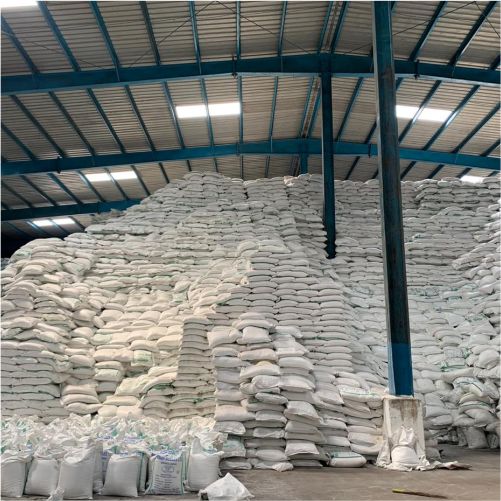
The government had decided to mandated the Agency to import and store sugar after to have proved useful in storing other food crops.
Speaking when winding-up discussions on the central government 2024/2025 Budget estimates in the National Assembly, the Finance Minister, Dr Mwigulu Nchemba said that sugar producers will now be required to disclose the cost of production as well as publishing distributors in each region.
He added, NFRA will remove the system of having only five agents throughout the country, saying that the government will set up a system to manage the sugar price cap for the benefit of consumers and remove the system of monopoly self-determination among local sugar producers who were also mandated as sole importers.
To expand the Agency storaging capacity, Dr Komba said NFRA has acquired a total of 19 warehouses from the Tanzania Initiative for Preventing Aflatoxin Contamination (TANIPAC) in order to cater for expanded market demand for cereals in neighboring countries.
Together with that, he said the Agency was working on the project building modern silos in various regions, informed that maize tonnage was increasing since President Samia Suluhu Hassan directed a significant price increase for farmers.
“Currently we have a total of 739,000 tonnes of cereals in our storages,” he said, saying the target is to store at least three million tons as of 2030,” he said.
During last year, the government set aside 35bn/- to empower the NFRA to implement a strategy to expand its storaging capacity to 700,000, the initiative which saw construction of new modern warehouses, as well as renovation of other cereal storage facilities at its diverse centers across the country.
Together with that, Dr Komba said NFRA will also resume with implementation of the halted project for the construction of modern silos in the regions of Ruvuma, Songea, Songwe, Shinyanga, Dodoma, and Makambako.
Currently, NFRA operates 72 purchasing points across eight regions—Dodoma, Dar es Salaam (Kipawa), Njombe (Makambako), Songwe, Rukwa (Sumbawanga), Arusha (Babati), Shinyanga and Songea.
The second tier involves purchasing grain in quantities of 2,000 tonnes or more from large-scale traders, while the third tier includes buying from cooperative societies where farmers aggregate their produce.
About The Author