










Summary
–The dialogue will explore stronger enforcement mechanisms, clear escalation pathways to the Council and Summit, and operationalisation of regional trade remedies to address persistent and politically sensitive NTBs.
–The regional trade within the Community has grown from US$ 6.42 billion in 2016 to US$ 15.25 billion in 2024, representing an approximate annual growth rate of 11–12 percent.
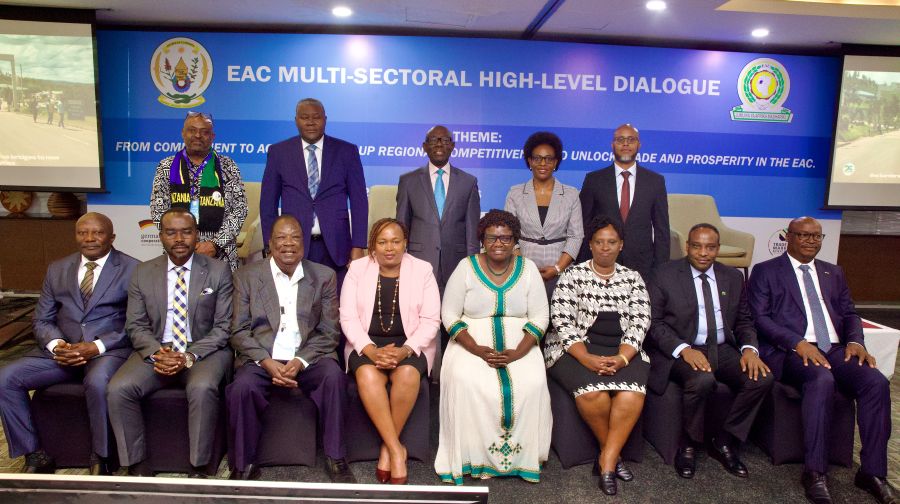
ARUSHA: THE East African Community (EAC) has launched a two-day high-level Multisectoral Dialogue in Kigali, Rwanda, to examine persistent and emerging constraints affecting intra-EAC trade and the broader regional integration agenda.
The meeting brings together technical and policy officials across key sectors in the Partner States to identify bottlenecks, evaluate the effectiveness of existing interventions, and propose concrete, actionable measures to accelerate the operationalisation of the Customs Union and Common Market.
Despite progress in establishing legal, institutional, and policy frameworks to support regional integration, intra-EAC trade has remained stagnant at approximately 15 percent of total trade for more than a decade, well below the region’s estimated potential of 30 percent to 50 percent higher.
The dialogue is therefore expected to reaffirm Partner States’ commitment to shifting from policy formulation to effective implementation, enforcement, and coordination, recognizing that the principal constraints to trade are increasingly operational and institutional rather than legal.

A key focus of the meeting is the continued prevalence of Non-Tariff Barriers (NTBs), which remain a major impediment to intra-EAC trade.
Issues such as discriminatory domestic taxes and charges, duplicative inspections, inconsistent application of Rules of Origin, and sanitary and phytosanitary measures continue to challenge seamless trade.
The dialogue will explore stronger enforcement mechanisms, clear escalation pathways to the Council and Summit, and operationalisation of regional trade remedies to address persistent and politically sensitive NTBs.
Participants will also review high transport and logistics costs, incomplete implementation of the One Network Area, and challenges in digital integration, including limited interoperability and weak real-time data exchange that cause duplication and border delays.
Uneven implementation of One-Stop Border Posts (OSBPs) and the Single Customs Territory, highlighting capacity gaps and uncoordinated border operations, will also be discussed.
Additional areas include delays in ratifying and enforcing Customs Union and Common Market commitments, slow services liberalization, low industrialisation, weak value addition, and SEZ performance, while considering climate risks and the critical role of youth and women in fostering inclusive growth and boosting regional trade participation.
Speaking at the opening ceremony, Rwanda’s Minister of Trade and Industry, Mr. Prudence Sebahizi, welcomed participants from all eight EAC Partner States and reiterated the importance of the dialogue.
He reiterated the government’s commitment to partnering with the private sector in driving EAC integration.
The Minister of State in charge of EAC Affairs, Ms. Yusta Kayitesi, emphasized that NTBs increase transaction costs, disrupt supply chains, weaken private-sector confidence, and undermine the credibility of the EAC as a rules-based market.
She highlighted that addressing these challenges is critical to unlocking the region’s trade potential through Partner States’ collaboration.

On her part, the Chairperson of the EAC Council of Ministers and Kenya’s Cabinet Secretary for the Ministry of East African Community, ASALs and Regional Development, Hon. Beatrice Askul Moe, called for simpler, faster, and more competitive trade processes.
She urged for a clear, actionable plan to improve the experience of businesses by reducing clearance times, easing movement of goods, and ensuring predictable regulations, emphasizing shared responsibility among all stakeholders.
The EAC Secretary General, Hon. Veronica Nduva, noted that regional trade within the Community has grown from US$ 6.42 billion in 2016 to US$ 15.25 billion in 2024, representing an approximate annual growth rate of 11–12 percent.
However, she added, intra-EAC trade still accounts for only about one-eighth of total exports, with the share of intra-regional trade increasing modestly from 11.5 percent in 2016 to 12.2 percent in 2024, indicating that EAC economies continue to rely heavily on external markets.
From the private sector front, the Vice Chairperson of the East African Business Council (EABC), Mr. Denis Karera, called on East Africans to focus on growing regional markets to become self-reliant.
He emphasized the need for practical, results-oriented measures, noting that “we need a scorecard to track progress and ensure we implement time-bound solutions that translate policy into real trade gains.”
Such accountability, he argued, is key to boosting intra-EAC trade and strengthening regional economic integration.
The Multisectoral Dialogue’s outcome is expected to generate a coherent set of priority actions and recommendations for consideration by the Council and the Summit to accelerate the realisation of a seamless, competitive and inclusive EAC single market and unlock the region’s full intra-regional trade potential.
About the East African Community:
The East African Community (EAC) is a regional intergovernmental organization comprising the Democratic Republic of Congo, the Federal Republic of Somalia, the Republic of Burundi, the Republic of Kenya, the Republic of Rwanda, the Republic of South Sudan, the United Republic of Tanzania and the Republic of Uganda.
The EAC aims to expand and deepen economic, political, social, and cultural integration to improve the quality of life of the people of East Africa through increased competitiveness, value-added production, trade, and investment.
About The Author
